By Roxanne Reid
Here, in the dry heartland of South Africa, a wealth of geology, fossils, animals and sweeping landscapes lie waiting to be explored. You’ll find the entrance to this park just off the N1 highway, about 6km south of Beaufort West in the Karoo. Here’s my pick of 17 things to do in the Karoo National Park.
Here, in the dry heartland of South Africa, a wealth of geology, fossils, animals and sweeping landscapes lie waiting to be explored. You’ll find the entrance to this park just off the N1 highway, about 6km south of Beaufort West in the Karoo. Here’s my pick of 17 things to do in the Karoo National Park.
1. Even if you’re only stopping over in the Karoo National Park for one night (as many do on a road trip between Cape Town and Johannesburg), you absolutely must drive the scenic Klipspringer Pass. Built in the ingenious dry-stone rock-stacking manner devised by Andrew Geddes Bain in the 19th century, it used some 7800 cubic metres of stone. Enjoy the winding route and changing landscapes along the way then stop at the Rooivalle lookout point to soak in the views.
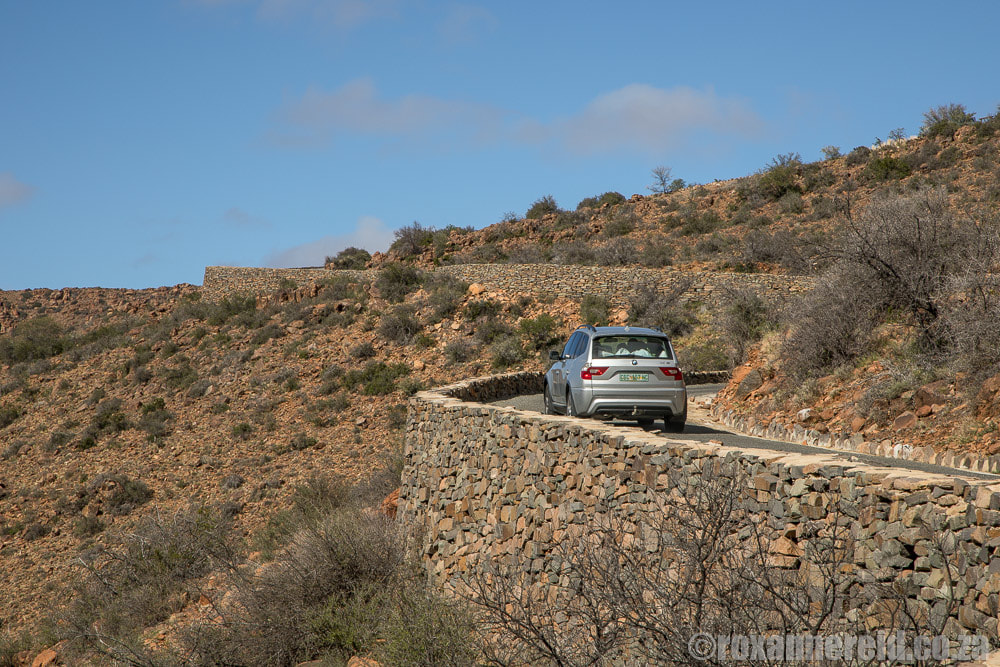
Klipspringer Pass
2. Look out along the Klipspringer Pass for Verreaux’s eagles (black eagles) soaring in lazy circles overhead, in search of their favourite meal, the dassie (rock hyrax). You may also see klipspringers here, which will impress you with their agility on the steep slopes.
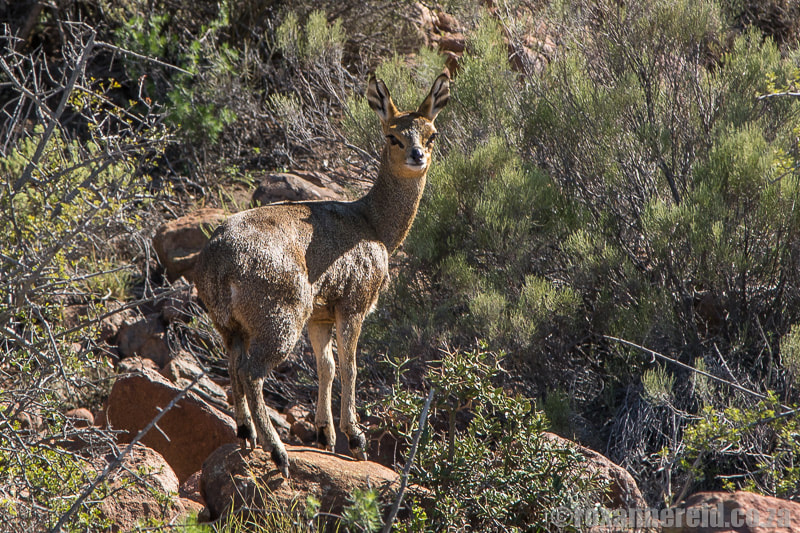
Klipspringer
3. For a longer game-viewing experience, continue along the 45km Potlekkertjie Loop where you have a chance of spotting animals like black-backed jackals, steenbok, red hartebeest, gemsbok, kudu, eland and Cape mountain zebra. You may even be lucky enough to see the park’s lions. These apex predators historically occurred in the area and were reintroduced to their old stomping grounds in 2010.
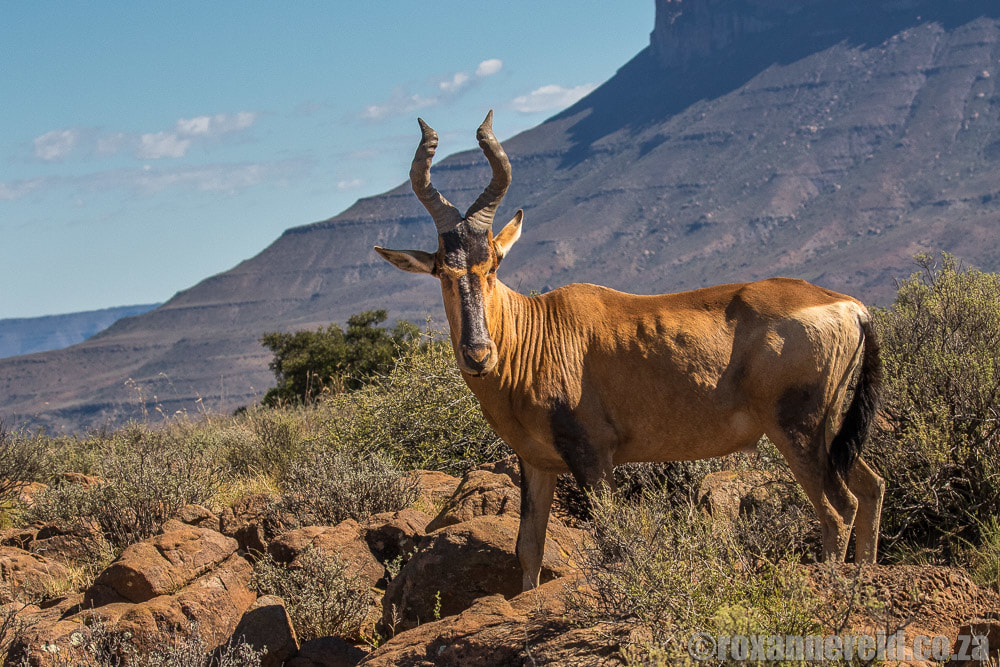
Red hartebeest
4. Pack a picnic to enjoy on your game drive. Stop at Doornhoek picnic site on the Potlekkertjie Loop or Bulkraal on the Lammertjiesleegte route. If you’re going to Bulkraal, take your cozzies so you can cool off in the swimming pool.
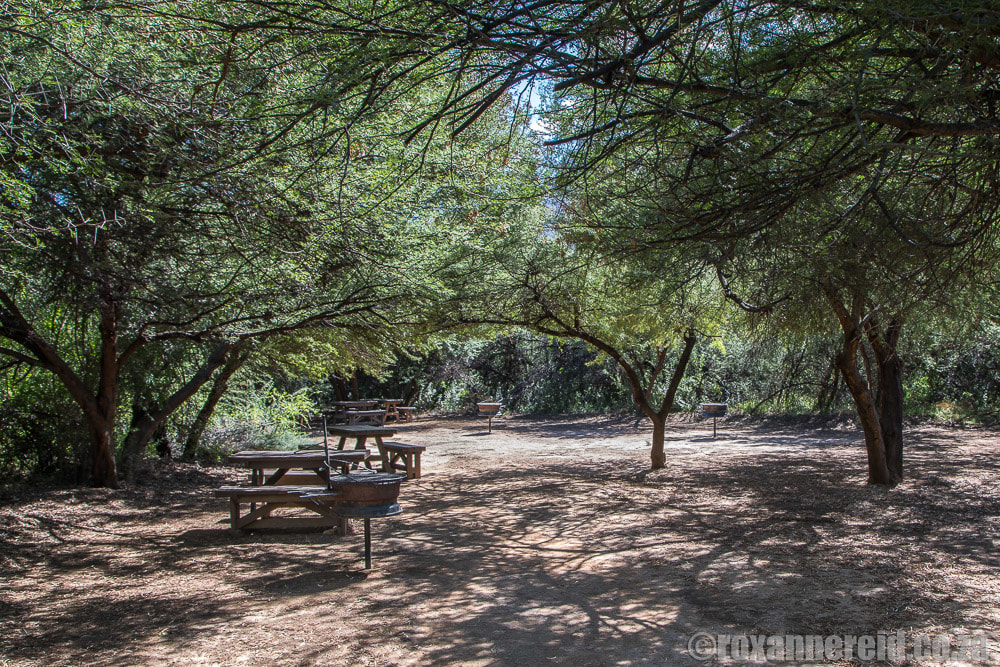
Doornhoek picnic site
5. To the north-east of the main rest camp, take a leisurely game drive along the 13km Lammertjiesleegte route over the open plains, where the sparse vegetation makes it easy to see animals as they graze. You can hope to meet the zebra, red hartebeest, black wildebeest and springbok.
6. Join a guided Karoo safari in the park’s open 4x4 to learn about the ecosystem and its inhabitants from your guide. Choose between a two- to three-hour early morning drive and a 90-minute night drive, which may yield sightings of aardwolf, bat-eared fox, caracal, aardvark or spotted eagle-owl. But remember that Karoo nights can be seriously cold in winter. Ask at reception about availability; in general, a minimum of four people is required.
6. Join a guided Karoo safari in the park’s open 4x4 to learn about the ecosystem and its inhabitants from your guide. Choose between a two- to three-hour early morning drive and a 90-minute night drive, which may yield sightings of aardwolf, bat-eared fox, caracal, aardvark or spotted eagle-owl. But remember that Karoo nights can be seriously cold in winter. Ask at reception about availability; in general, a minimum of four people is required.
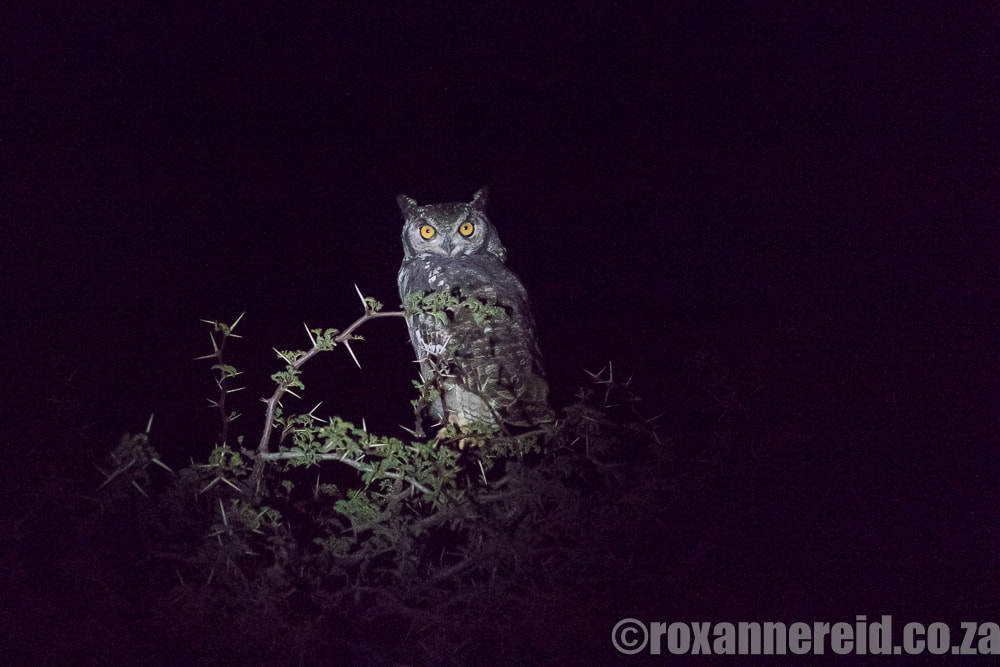
Spotted eagle-owl
7. Explore the 800m Bossie Trail at the main rest camp to learn about the Karoo’s rich diversity of succulents and other plants, such as aloes, crassulas, the spiny klapperbossie, num-num, and boegoekaroo. The Karoo National Park incorporates both the Nama-Karoo and Grassland biomes.
8. Explore the 400m Fossil Trail in the main rest camp to see fossil fragments, even entire skeletons turned to stone. Info boards about the geology and palaeontology of the area pack in the facts and show what the Karoo Basin looked like when it was still a swamp. Meet some creatures who lived here 250 million years ago, from small insect-eating hunters like modern-day lizards or shrews to terrifying gorgonopsians. These were the super-predators of the Late Permian Period and the first carnivores to actively run down their dinner and kill with sabre-like fangs.
8. Explore the 400m Fossil Trail in the main rest camp to see fossil fragments, even entire skeletons turned to stone. Info boards about the geology and palaeontology of the area pack in the facts and show what the Karoo Basin looked like when it was still a swamp. Meet some creatures who lived here 250 million years ago, from small insect-eating hunters like modern-day lizards or shrews to terrifying gorgonopsians. These were the super-predators of the Late Permian Period and the first carnivores to actively run down their dinner and kill with sabre-like fangs.
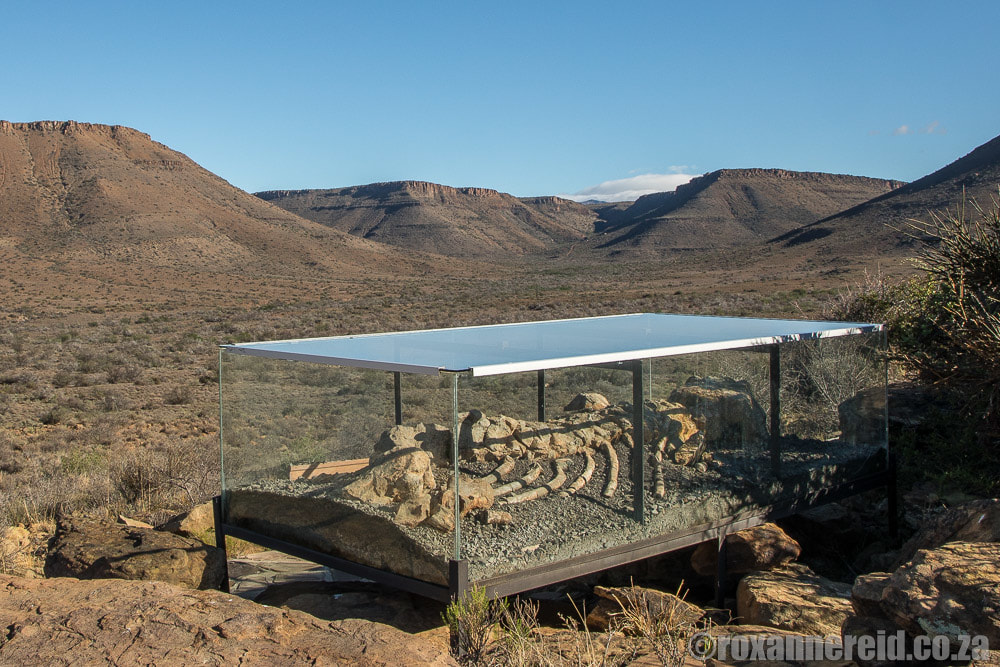
Fossil Trail
9. If you’ve brought your mountain bike and are looking for a short outride in the main rest camp, tackle the 2.7km Sylvester single track MTB route. This is for overnight visitors only, no day trippers. The route is named after Sylvester the lion, who twice escaped from the park and led rangers on a merry dance around the veld before he could be recaptured. He was later relocated to the Addo Elephant National Park, where he stopped his jail-break ways and settled down.
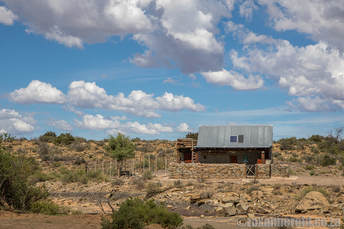
10. If you have a 4x4, a fabulous Karoo accommodation choice is to book a night or two at Afsaal Cottage, about 25km from the main rest camp. This renovated old shepherd’s hut on the Nuweveld 4x4 route accommodates two adults and two kids. A small waterhole is lit up at night so you can enjoy 24-hour game viewing from your verandah. The cottage is rustic, with solar lights, a gas fridge, gas burners for cooking and gas geyser for hot-water showers. There’s no cellphone reception; rather kick back and enjoy a braai and some star gazing (see point 15).
10. If you have a 4x4, a fabulous Karoo accommodation choice is to book a night or two at Afsaal Cottage, about 25km from the main rest camp. This renovated old shepherd’s hut on the Nuweveld 4x4 route accommodates two adults and two kids. A small waterhole is lit up at night so you can enjoy 24-hour game viewing from your verandah. The cottage is rustic, with solar lights, a gas fridge, gas burners for cooking and gas geyser for hot-water showers. There’s no cellphone reception; rather kick back and enjoy a braai and some star gazing (see point 15).
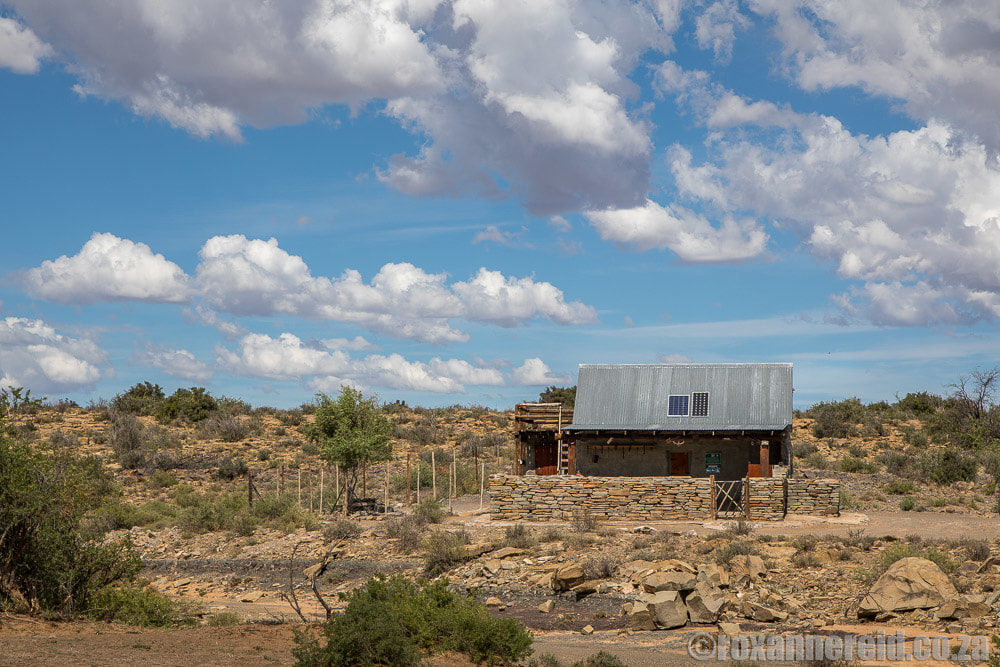
Afsaal Cottage
11. Pitch your tent in what must be one of the most pleasant campsites in the country, with spotless ablutions, grassed shady sites and lots of birds like mountain wheatear, Karoo scrub-robin and lesser double-collared sunbird to keep you from getting bored. You may even get a visit from a couple of leopard tortoises.
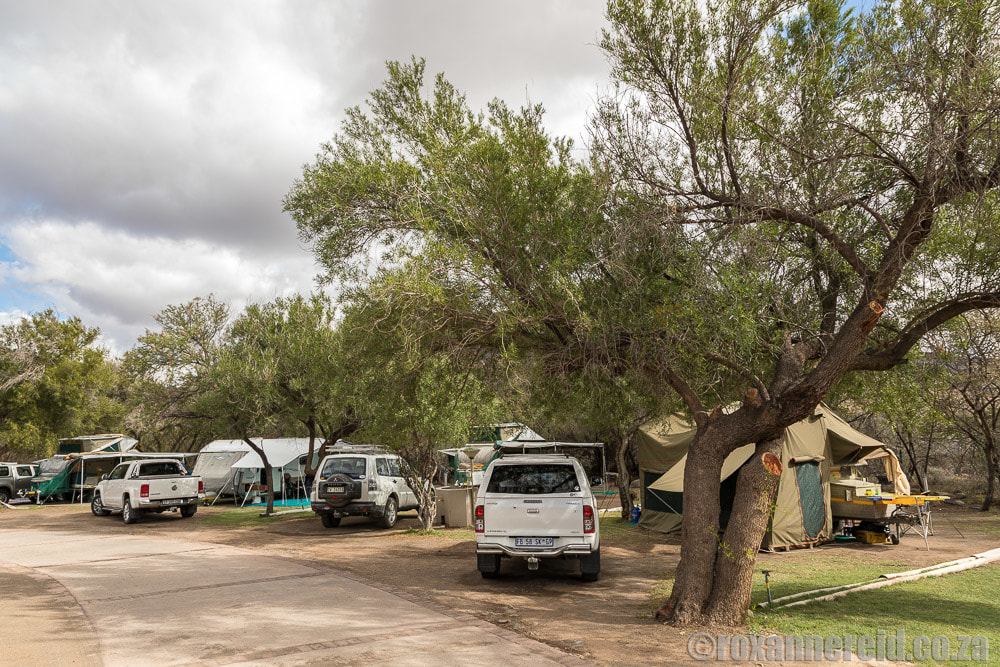
Campsite
12. Drive one of the 4x4 trails. My favourite is the 6km Pienaar’s Pass route, built by farmer Kowie Pienaar and his labourers in the 1940s and 50s. It took ten years and a fair amount of dynamite to achieve. Pay R280 (May 2018 price) and get a permit from reception for this trail, which is rough and not for the inexperienced or those afraid of narrow ledges and heights.
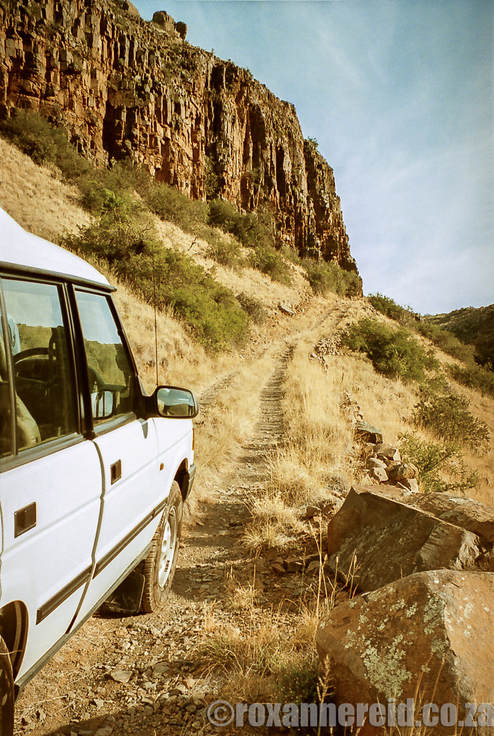
Part of the Pienaar's Pass 4x4 trail
The 13km Afsaal Eco-Trail and 90km Nuweveld Eco-Trail branch off the Potlekkertjie Loop, with additional 7km loops off each for a longer experience. These are not difficult routes but you do need to take it slowly and to have 4x4 for sandy areas and river crossings. You don’t need to book for these trails, but I’d advise you to check with reception before you leave about conditions along the way.
13. Spend some time at the Old Schuur Interpretive Centre near the campsite to learn about the history, people, plants, geology, ancient and modern animals of the area. There are taxidermy specimens of bat-eared fox, black eagle, riverine rabbit (the only one you’re likely to see in the park, they’re so rare) and caracal as part of an exhibit about diversity in the Karoo. There’s also info about rock art and the food that early people ate. I particularly liked the room with photos and living memories of people who grew up in the 1940s and 50s in the area that is now the park.
13. Spend some time at the Old Schuur Interpretive Centre near the campsite to learn about the history, people, plants, geology, ancient and modern animals of the area. There are taxidermy specimens of bat-eared fox, black eagle, riverine rabbit (the only one you’re likely to see in the park, they’re so rare) and caracal as part of an exhibit about diversity in the Karoo. There’s also info about rock art and the food that early people ate. I particularly liked the room with photos and living memories of people who grew up in the 1940s and 50s in the area that is now the park.
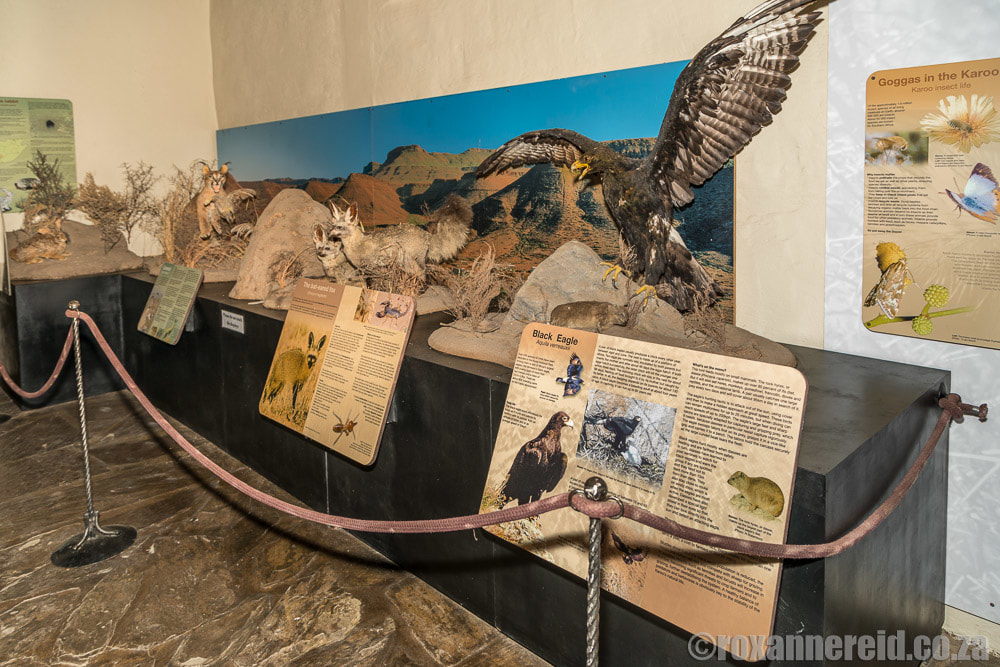
Old Schuur Interpretive Centre display
14. Here in the Karoo, it’s no surprise that geology – the rock formations, mountains and landscape – takes centre stage. The park stands on rocks of the Beaufort Group that dates back to the Permian Period. You’ll see mudstone, sandstone and dolerite sills and dykes. Take a drive along the Klipspringer Pass and stop at the Rooivalle lookout to appreciate their beauty (see point 1), see how erosion has sculpted the rocks and koppies. You can also drive along one of the 4x4 trails to appreciate the middle and upper plateaus of the mountains (see point 12).
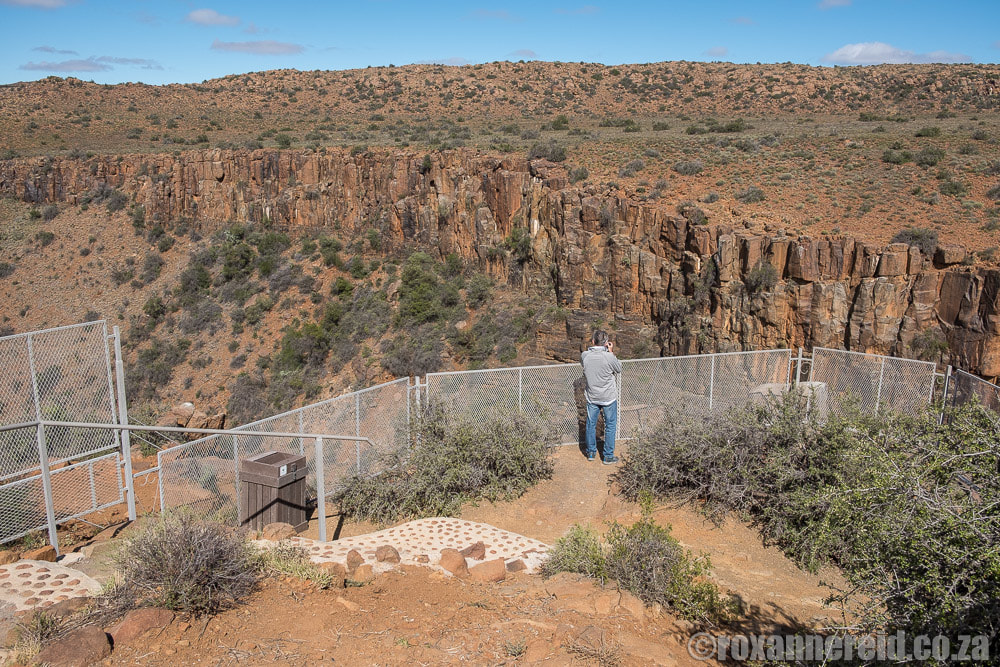
One of the lookout's on Klipspringer Pass - good places to appreciate the rock formations
15. Indulge in an evening of star-gazing here in the Karoo, where the skies are dark and the air clean. Walk away from the lights and buildings in the main rest camp or campsite and look up to appreciate the star-freckled sky, especially on nights with no moon. Even better, book a stay at Afsaal or Embezwini cottages to get further away from the lights of the rest camp and enjoy your stargazing in solitude and silence.
16. Go tortoise spotting. The park is home to five species – the highest density of species for any equivalent area in the world. They are: the leopard tortoise (South Africa’s largest tortoise species and the most likely to be seen here), the tent tortoise, the tiny Karoo dwarf tortoise (which only occurs in the Great Karoo), the angulate tortoise, and the Greater Karoo tortoise.
16. Go tortoise spotting. The park is home to five species – the highest density of species for any equivalent area in the world. They are: the leopard tortoise (South Africa’s largest tortoise species and the most likely to be seen here), the tent tortoise, the tiny Karoo dwarf tortoise (which only occurs in the Great Karoo), the angulate tortoise, and the Greater Karoo tortoise.
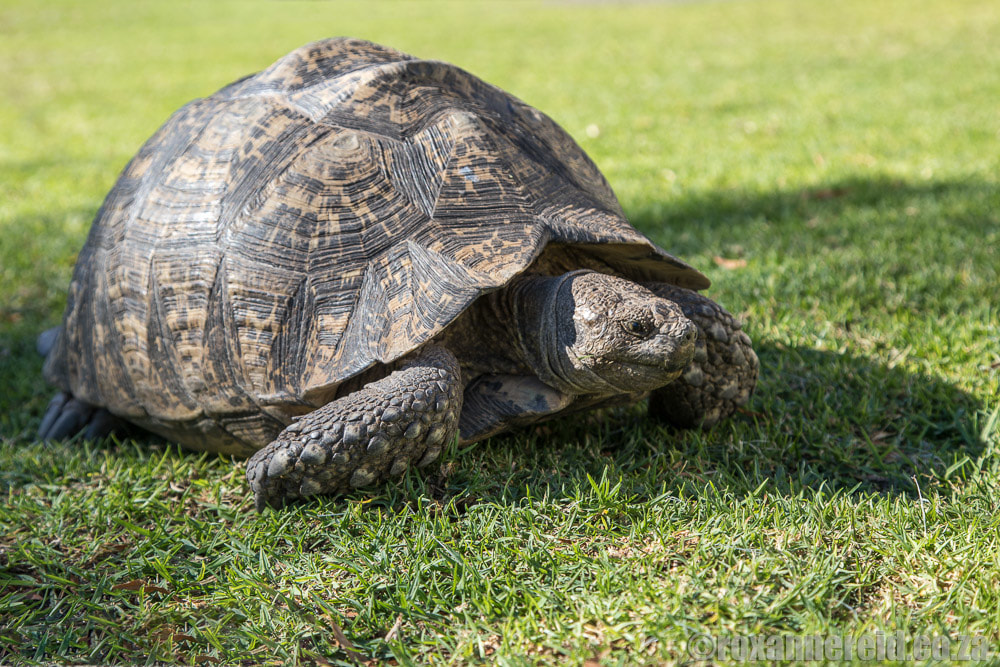
Leopard tortoise in the campsite
17. Visit the bird hide at the small dam near the main camp to see water birds, often including dabchicks, herons and red-knobbed coots in a frenzy of nest building, as well as weavers and red bishops. The park has more than 200 species of birds, including African rock pipit, cinnamon-breasted warbler, longbilled lark, short-toed rock thrush, Karoo korhaan and kori bustard.
For more about the nitty-gritties of this lovely park, see my post Karoo National Park: the ultimate guide.
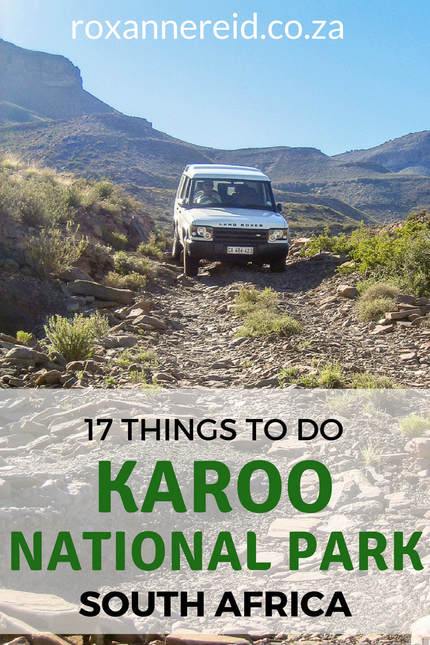
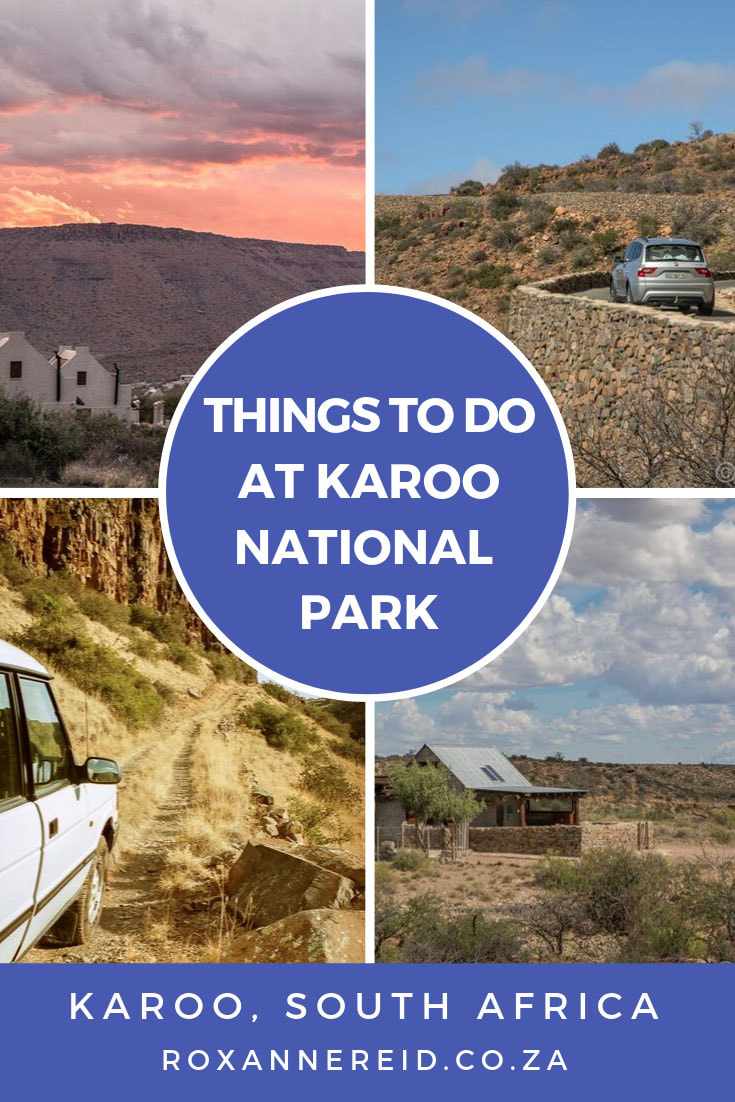
Like it? Pin this image!
For more about the nitty-gritties of this lovely park, see my post Karoo National Park: the ultimate guide.
Like it? Pin this image!
You may also enjoy
10 things to do in Beaufort West in the Karoo
Why to visit Richmond in the Karoo
Copyright © Roxanne Reid - No words or photographs on this site may be used without permission from roxannereid.co.za
10 things to do in Beaufort West in the Karoo
Why to visit Richmond in the Karoo
Copyright © Roxanne Reid - No words or photographs on this site may be used without permission from roxannereid.co.za
 |  |