By Roxanne Reid
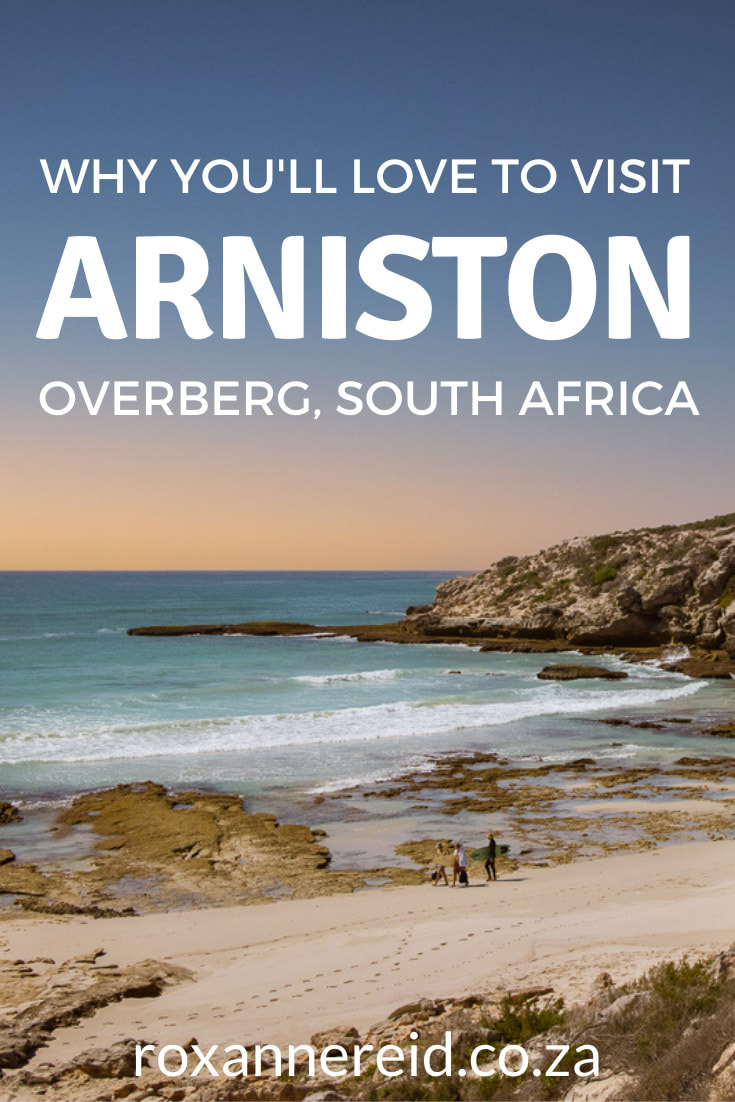
White dunes and turquoise sea, bright-coloured fishing boats and white-washed cottages, a coastline peppered with shipwrecks, a sleepy village with two names. Make a two-and-a-half-hour drive from Cape Town and discover some of the best things to do in Arniston / Waenhuiskrans, from whale-watching and caving to fishing and snorkeling.
White dunes and turquoise sea, bright-coloured fishing boats and white-washed cottages, a coastline peppered with shipwrecks, a sleepy village with two names. Make a two-and-a-half-hour drive from Cape Town and discover some of the best things to do in Arniston / Waenhuiskrans, from whale-watching and caving to fishing and snorkeling.
Originally called Waenhuiskrans, Arniston in the Cape Overberg was later named after a British transport ship that wrecked here in 1815 (see point 14). Somehow both names seem to have stuck and are still used today, so it’s the only South African town that has two official names. A monument overlooking the beach in front of the Arniston Hotel commemorates some of those who died in the shipwreck; another can be found 3km further northwest, where the remains of the wreck still lie buried under the sea.
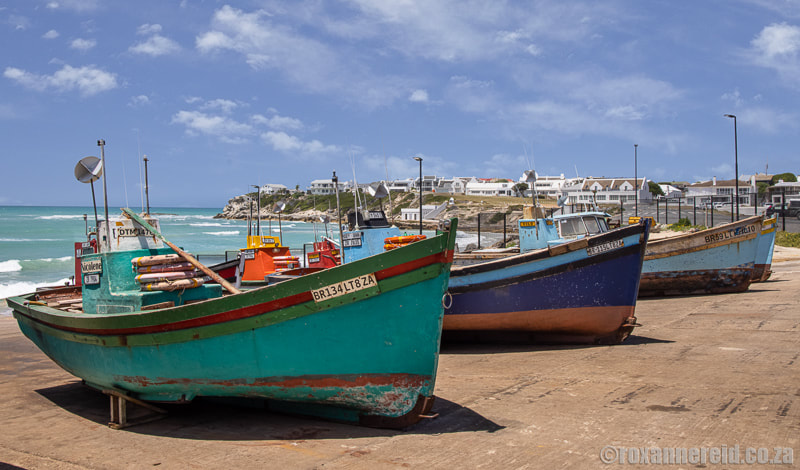
See the colourful old boats in the harbour at Arniston
Whichever name you decide to use, you’ll find a tight-knit village of fishermen’s cottages and holiday homes overlooking the ocean, all faintly reminiscent of Greece in the quality of the light, the chilled mood. Even the changing colour of the sea will get you scrabbling to remember descriptive words like aquamarine, azure and cerulean.
Whether you want to relax, observe or be energetic, here are some activities and experiences you can enjoy in the area.
1. Go walkabout in Kassiesbaai
Whether you want to relax, observe or be energetic, here are some activities and experiences you can enjoy in the area.
1. Go walkabout in Kassiesbaai
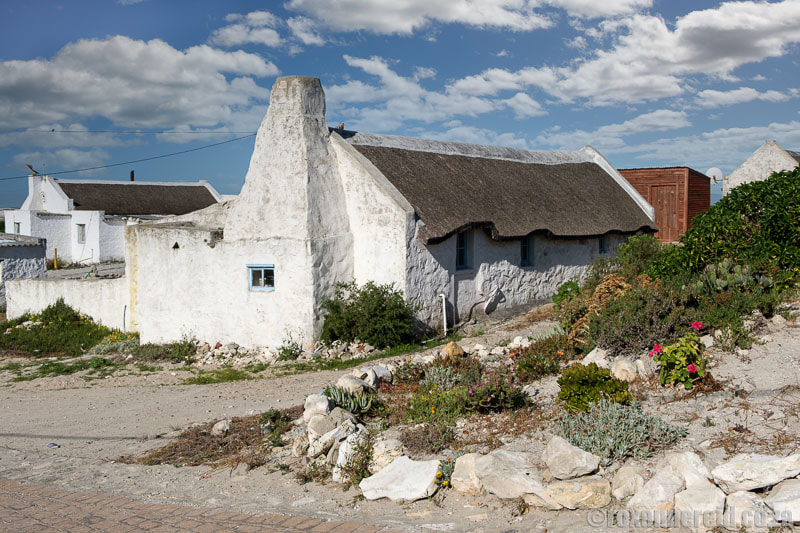
The old fishing village of Kassiesbaai is a national heritage site
If you love character in buildings, you’ll love the historic fishing village of Kassiesbaai tucked into the sand dunes above the small harbour at Arniston. The name comes from old paraffin kassies (crates) that used to wash ashore from shipwrecks, which were used by the early fishermen in building their homes. Dating back to the 1800s, Kassiesbaai is now a national heritage site. It’s home to thatched and white-washed cottages that descendants of the original families still own, having successfully fought off some attempts to remove them in apartheid times. Walk the streets, talk to the locals, take photos, get inspiration for your art, drink in the views out to sea. If you’re lucky, you might even see the fishermen at the harbour coming or going in their colourful boats.
2. Have lunch at Willeen’s
2. Have lunch at Willeen’s
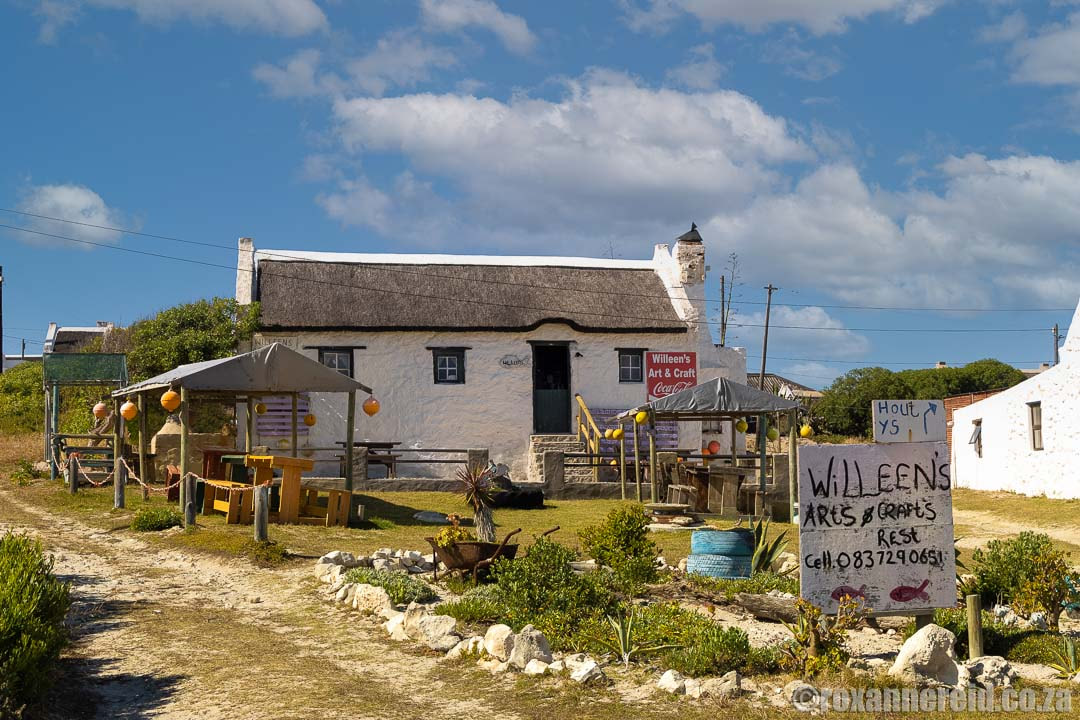
Enjoy fish and chips in an old Kassiesbaai cottage that overlooks the beach
Wanna scoff fish and chips right next to the beach? Pop in to Willeen’s in one of the old cottages at Kassiesbaai. Get sea views from rustic shaded tables outside or eat inside, where the walls are purple and there’s a busy clutter of knick knacks for sale. On the menu you’ll usually find burger and chips, calamari and chips, fish and chips, perhaps even a curry. We had yellowtail and chips, a generous portion that was very tasty. Run by Willeen and her son, the place started as a shop in 2003 and began serving food in 2007. Go ahead and support a local in this historic village. There’s a craft shop and guest house next door.
3. Do some whale-watching
Whales come to the ocean around Arniston each year from around May to November, though the best months for whale-watching are July to September, when you can see them lobtailing, spyhopping and breaching. Southern right whales come from Antarctica to Southern African waters to breed, so you may see calves too. Other whales that occur in the area include Bryde’s and True’s beaked whales.
4. Explore the Waenhuiskrans cave
3. Do some whale-watching
Whales come to the ocean around Arniston each year from around May to November, though the best months for whale-watching are July to September, when you can see them lobtailing, spyhopping and breaching. Southern right whales come from Antarctica to Southern African waters to breed, so you may see calves too. Other whales that occur in the area include Bryde’s and True’s beaked whales.
4. Explore the Waenhuiskrans cave
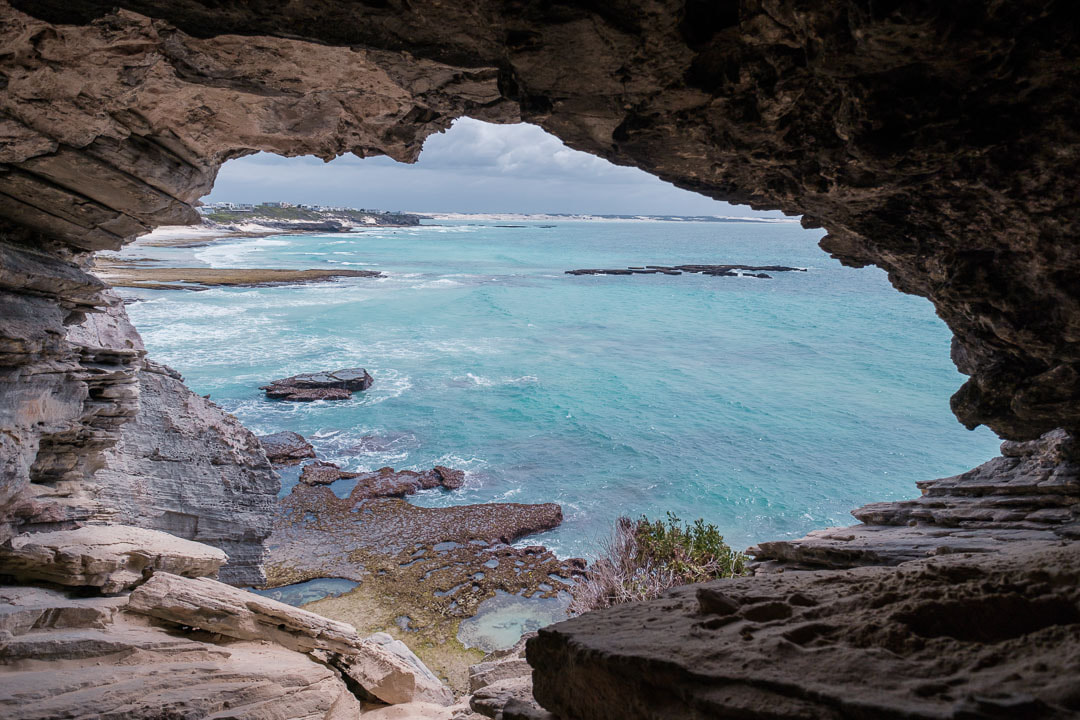
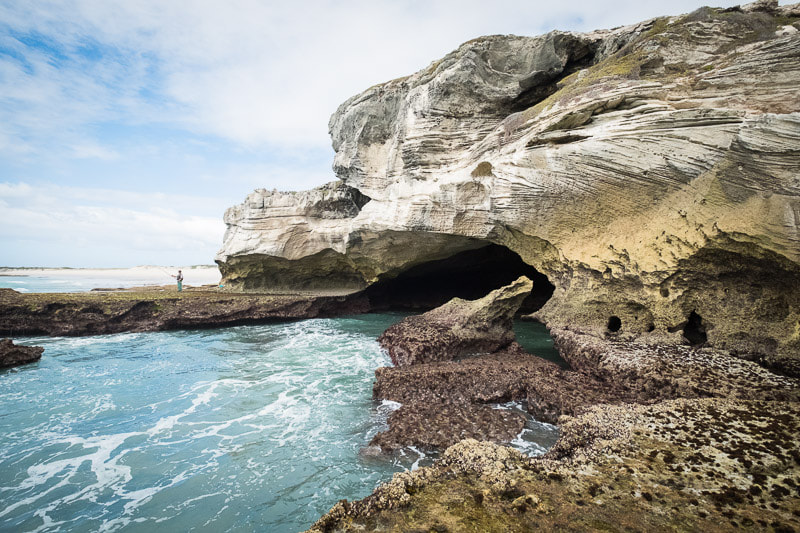
Explore the Waenhuiskrans cave at low tide (see also the intro photo)
Don’t miss a walk across the rocks at low tide to see the Waenhuiskrans cave in the Waenhuiskrans Nature Reserve. Follow the signs that point to ‘Grot’ (cave) from Roman Beach and along the dunes. It’s about a 1-1.5km walk from Roman Beach, enjoying views over dune and ocean. The last stretch is uneven and slippery over rocks so make sure you wear shoes with a good grip and that you don’t mind getting wet. The story goes that the name Waenhuiskrans (which means wagon house cliff) comes from the fact that the cave is big enough for an ox wagon and a team of 16 oxen to turn around in. Not that it would be possible for them to get down there in the first place, but you get the idea. Keep an eye out so you don’t get trapped by the incoming tide.
5. Go fishing
Fishing has been the backbone of Arniston for more than a century so join the fun. Bait and tie your hook, cast a line from the rocks or the beach and enjoy the wide views of the ocean, the taste of salt on your lips. You might even catch something like steenbras or galjoen.
6. Find an old fisherman’s cottage
5. Go fishing
Fishing has been the backbone of Arniston for more than a century so join the fun. Bait and tie your hook, cast a line from the rocks or the beach and enjoy the wide views of the ocean, the taste of salt on your lips. You might even catch something like steenbras or galjoen.
6. Find an old fisherman’s cottage
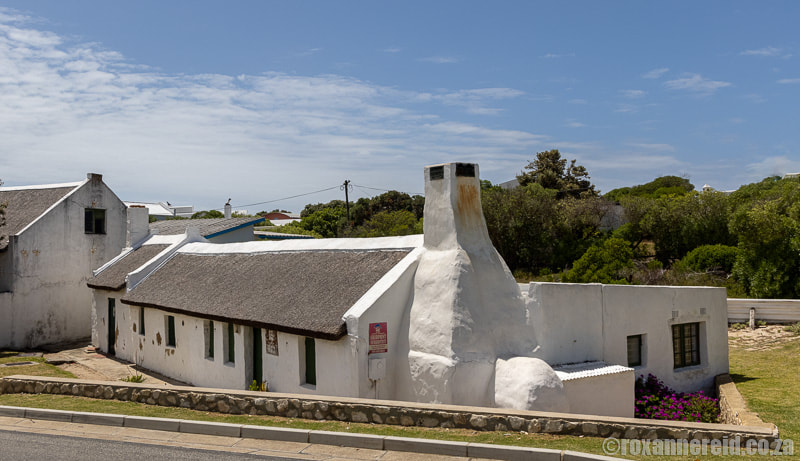
One of the oldest cottages in Arniston / Waenhuiskrans
See history still standing at the fisherman’s cottage at 15 Pratt Street in Arniston. It’s said to be one of the earliest in the village. Although I haven’t been able to discover the date when it was built, it apparently predates Kassiesbaai (see point 1). It has thick whitewashed walls, a low thatched roof, small shuttered windows and a door that tall people would struggle to get through without taking a bow.
7. Explore the dunes
Explore the creamy white dunes around Arniston. Climb to the top of a high dune to get wonderful views out to sea, then dune-surf down. Remember that for environmental reasons you’re no longer allowed to drive your 4x4 vehicle or quad bike along the dunes.
8. Go snorkeling
Bring your goggles and snorkel and spend a fascinating hour or two exploring the rocky pools on the lookout for colourful sea creatures like urchins and anemones. It’s great fun for the whole family.
9. Go to the beach
7. Explore the dunes
Explore the creamy white dunes around Arniston. Climb to the top of a high dune to get wonderful views out to sea, then dune-surf down. Remember that for environmental reasons you’re no longer allowed to drive your 4x4 vehicle or quad bike along the dunes.
8. Go snorkeling
Bring your goggles and snorkel and spend a fascinating hour or two exploring the rocky pools on the lookout for colourful sea creatures like urchins and anemones. It’s great fun for the whole family.
9. Go to the beach
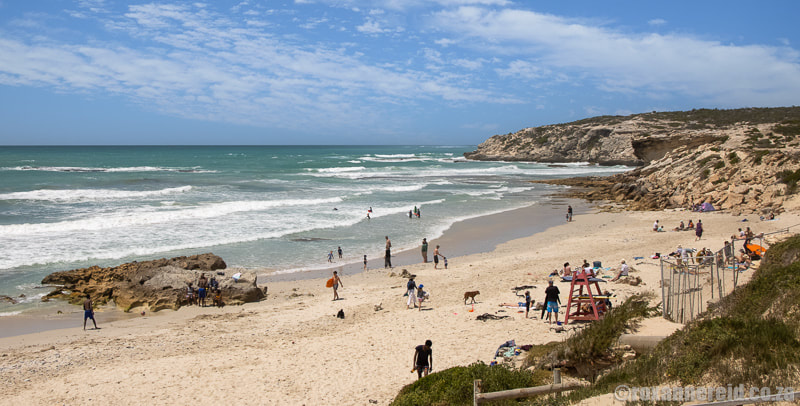
Swimmers, surfers and kite-surfers all love Roman Beach
Pack your hat and sunscreen for a day on the beach. Roman Beach in the Waenhuiskrans Nature Reserve is by far the most popular hangout on hot summer days in Arniston, a place for early morning beach walks, lazing under a beach umbrella, building sand castles, swimming or even body boarding and surfing. The warm Mozambique current makes for pleasant water temperatures. There’s another beach in front of the hotel, but it’s quite small except at low tide.
10. See the fish traps
Walk along the coast near Baken at low tide and you should be able to see the ancient fish traps that were first used in the Late Stone Age. Basically rocky pools, they’re in the Waenhuiskrans Nature Reserve about 4km from the harbour. Get there by continuing past the turnoff to the Waenhuiskrans cave from Roman Beach. The idea was that fish would swim in at high tide when the water covered the traps. Then when the tide went out, the fish would be stranded in the rock pools and could be plucked out for dinner. I’ve been told that the locals still use them today, but I haven’t seen that for myself. Other reminders of the strandlopers who used to live along the coast here are shell middens in the dunes that contain sea shells and bones.
11. Enjoy fresh seafood
10. See the fish traps
Walk along the coast near Baken at low tide and you should be able to see the ancient fish traps that were first used in the Late Stone Age. Basically rocky pools, they’re in the Waenhuiskrans Nature Reserve about 4km from the harbour. Get there by continuing past the turnoff to the Waenhuiskrans cave from Roman Beach. The idea was that fish would swim in at high tide when the water covered the traps. Then when the tide went out, the fish would be stranded in the rock pools and could be plucked out for dinner. I’ve been told that the locals still use them today, but I haven’t seen that for myself. Other reminders of the strandlopers who used to live along the coast here are shell middens in the dunes that contain sea shells and bones.
11. Enjoy fresh seafood
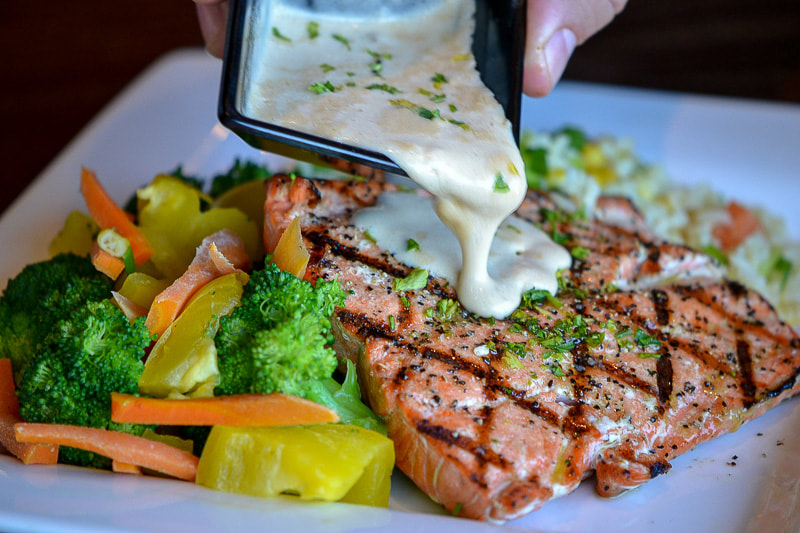
Enjoy a surfeit of fresh seafood when you visit Arniston
If you love fresh seafood, don’t miss a meal in Arniston, either at Willeen’s (see point 2) or at the Arniston Spa Hotel, which has two restaurants – the dining room and the more relaxed Bistro Restaurant. For the trendiest spot, choose a table under an umbrella on the open-air deck of the bistro with views of the sea and harbour, the sound of breakers in your ears. Enjoy well-prepared seafood like sole, yellowtail, silverfish or even sushi.
12. Stay at the Arniston Hotel
12. Stay at the Arniston Hotel
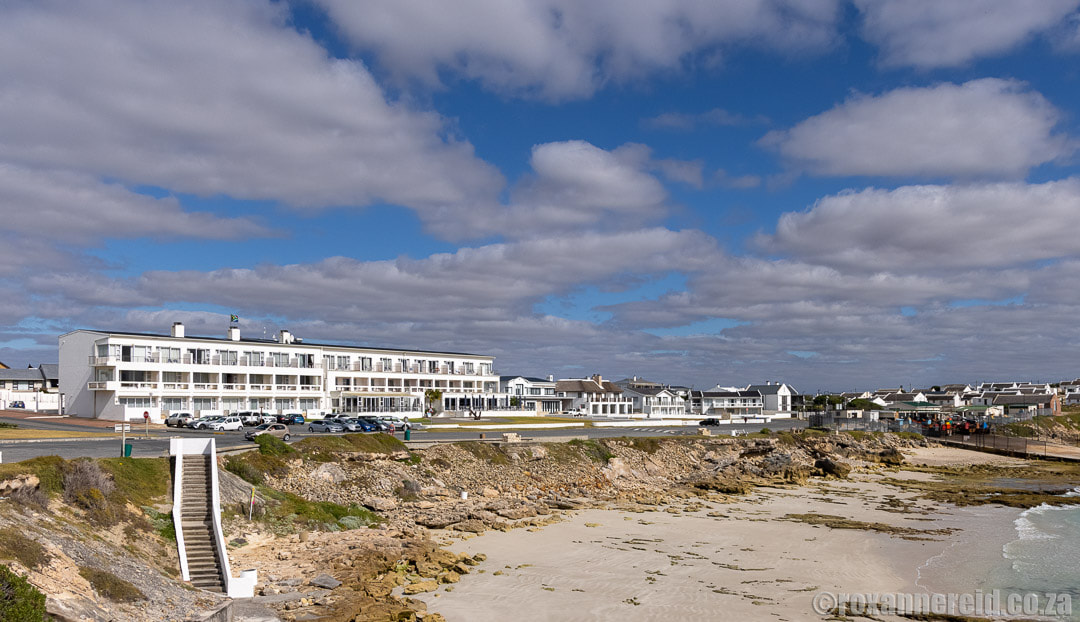
The Arniston Spa Hotel overlooks the beach, ocean and fishing harbour
Arniston has the kind of allure that brings you back time and again, so it’s no surprise that we’ve visited numerous times. You can camp or stay in self-catering accommodation but over the past 25 years our all-time favourite Arniston accommodation has remained the Arniston Hotel, now rebranded as the Arniston Spa Hotel.
Just a stone’s throw from the beach, it was originally built in 1933 and has had a varied past. From a place where rowdy types came to knock back the booze in the early days, it turned all prim and proper after World War II – a place where single women were discouraged and unmarried couples definitely got the cold shoulder. There was a major makeover in the 1980s (the incarnation we first fell in love with) and again in the early 2000s, when it became the inclusive, family-friendly place it is today. It’s now part of the Cape Country Routes collection of privately owned hotels.
Just a stone’s throw from the beach, it was originally built in 1933 and has had a varied past. From a place where rowdy types came to knock back the booze in the early days, it turned all prim and proper after World War II – a place where single women were discouraged and unmarried couples definitely got the cold shoulder. There was a major makeover in the 1980s (the incarnation we first fell in love with) and again in the early 2000s, when it became the inclusive, family-friendly place it is today. It’s now part of the Cape Country Routes collection of privately owned hotels.
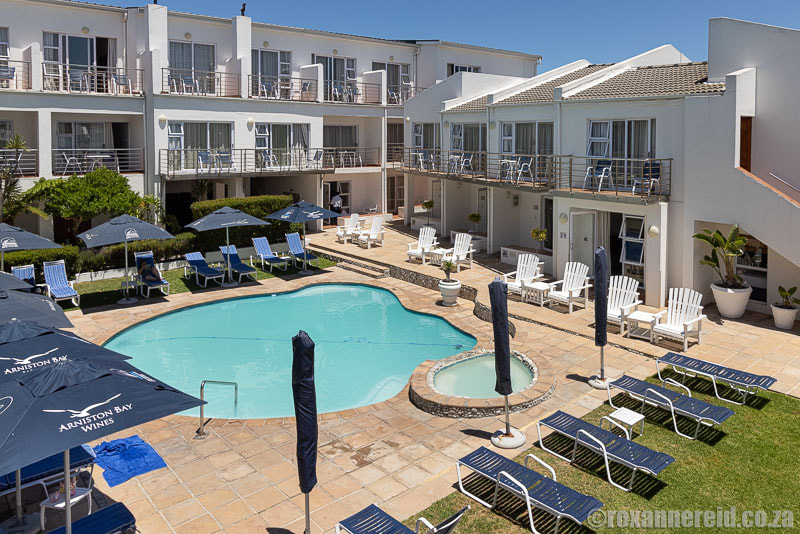
Cool off in the swimming pool at the Arniston Spa Hotel on hot summer days
There are rooms facing the garden courtyard and pool, but I particularly love those that give a widescreen view out to sea. There’s always something interesting to watch – fishing boats going out or coming back in the early morning, sunrises and sunsets splashing across the sky, people fossicking in the rock pools along the beach or going for a walk to explore the village.
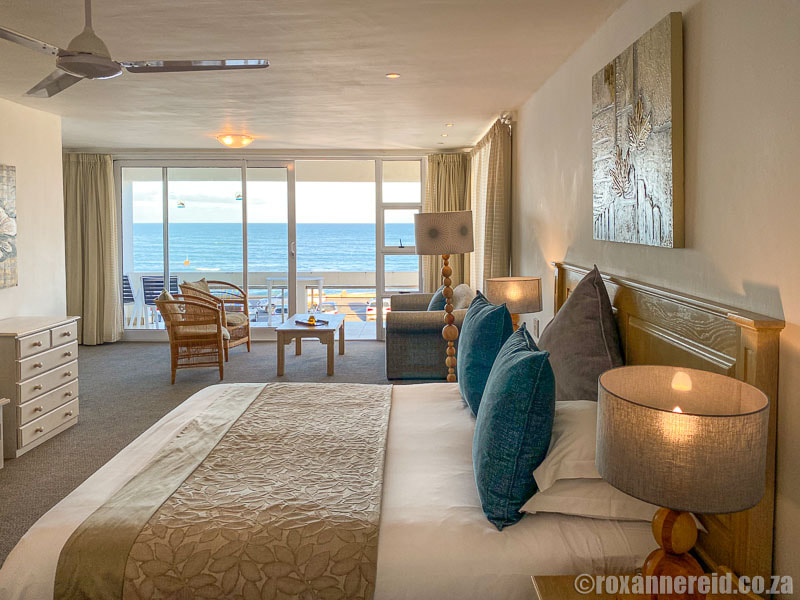
Pick of the bunch at the Arniston Hotel are the rooms with a view out to sea
Sit on the balcony overlooking the waves with a cup of coffee in the early morning or a glass of wine in the evening, watch the lights twinkle on as the sky goes dark. Use your binos to look for whales or get lost in a good book. Cool off with a swim in the hotel pool or lounge under a shade umbrella with a cocktail, treat yourself to a massage or manicure at the spa (see point 13) or lunch at the Bistro – if you can find room in your stomach after the substantial breakfast spread. I’ve always found the hotel to be the perfect place to relax and recoup after we’ve been out exploring the village and the wider area.
13. Enjoy a spa massage
Want to feel pampered and stress free? Book a massage or treatment at the Gingko Spa at the hotel. They have a hydrotherapy bath, Turkish steam room and saunas, and offer everything from manicures and pedicures to massages, facials and body treatments.
Further afield
14. Visit the Bredasdorp Shipwreck Museum
13. Enjoy a spa massage
Want to feel pampered and stress free? Book a massage or treatment at the Gingko Spa at the hotel. They have a hydrotherapy bath, Turkish steam room and saunas, and offer everything from manicures and pedicures to massages, facials and body treatments.
Further afield
14. Visit the Bredasdorp Shipwreck Museum
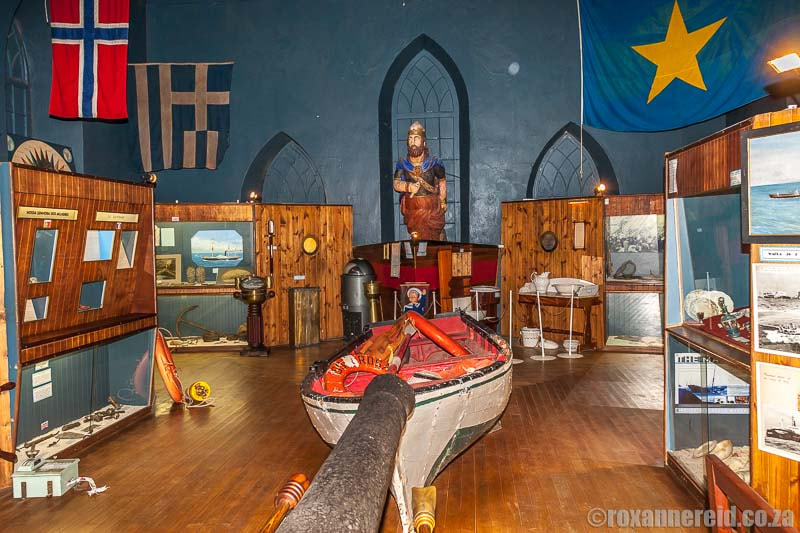
The Shipwreck Museum is a must if you're interested in the wrecks that dot the coastline
As you pass through Bredasdorp (23km away) on your way to Arniston, pop into the small Shipwreck Museum in Independent Street to winkle out the story of the wreck of the Arniston and some of the other famous shipwrecks of the area. The Arniston was on its way from Ceylon (now Sri Lanka) to England when gale force winds destroyed its sails and it broke up on the sharp rocks of the Arniston reef. Only six of 378 people on board survived. Two weeks after the wreck, a farmer was looking for lost sheep when he stumbled on the survivors, surrounded by rotting corpses washed up on the beach. The wreck was declared South Africa’s first underwater historical monument in 1982.
15. Visit the De Mond Nature Reserve
15. Visit the De Mond Nature Reserve
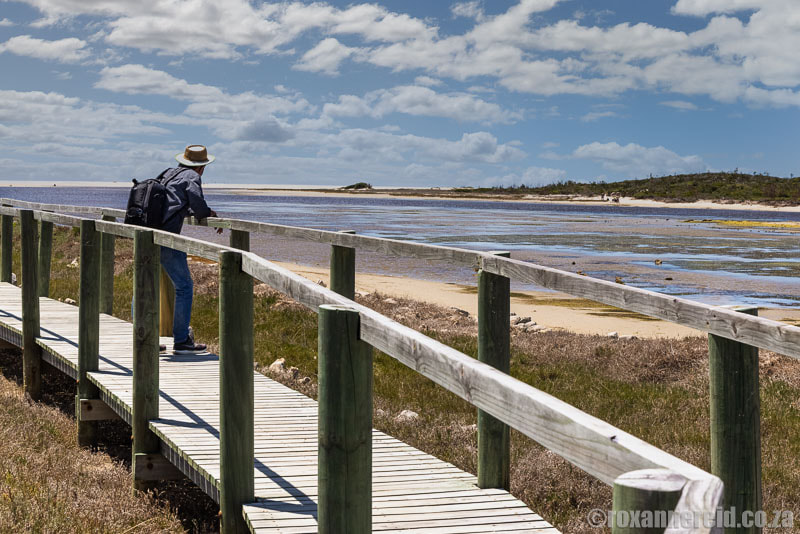
The boardwalk at De Mond follows the river towards the mouth and the sea
You’ll find De Mond Nature Reserve at the mouth of the Heuningnes River some 23km west of Arniston. The estuary is extremely popular with people who love to fish for grunter, garrick/leervis and stumpnose, and to swim. Perhaps my favourite thing to do here is to walk along the boardwalk in search of water birds and waders like three-banded plover, Kittlitz plover, great white egret, Damara tern and African black oystercatcher.
The 954ha of protected land and ocean is a biodiversity Eden with small mammals like badger, caracal and porcupine, and more than 200 bird species. The estuary is recognised as a Ramsar Wetland of International Importance. Go mountain biking or hiking along the circular 7km Sterna Trail, or walk the De Mond to Arniston trail to take in dune fields, coastal fynbos, salt marshes and beautiful stretches of white beach.
16. Visit De Hoop Nature Reserve
It’s about a 70km drive east of Arniston to the De Hoop Nature Reserve, well worth a day visit to explore its highlights. These include 1500 plants of the Cape Floral Kingdom, the vlei which is a Ramsar Wetland of International Importance, and excellent land-based whale-watching from June to November. Go mountain biking or hiking, take a game drive see mammals like Cape mountain zebra, eland and bontebok and birds like flamingo. My favourite activity here is the guided marine walk along the beach at low tide to discover sea creatures in the rocky pools.
More things to do at De Hoop Nature Reserve
17. Stop at other small towns in the area
The 954ha of protected land and ocean is a biodiversity Eden with small mammals like badger, caracal and porcupine, and more than 200 bird species. The estuary is recognised as a Ramsar Wetland of International Importance. Go mountain biking or hiking along the circular 7km Sterna Trail, or walk the De Mond to Arniston trail to take in dune fields, coastal fynbos, salt marshes and beautiful stretches of white beach.
16. Visit De Hoop Nature Reserve
It’s about a 70km drive east of Arniston to the De Hoop Nature Reserve, well worth a day visit to explore its highlights. These include 1500 plants of the Cape Floral Kingdom, the vlei which is a Ramsar Wetland of International Importance, and excellent land-based whale-watching from June to November. Go mountain biking or hiking, take a game drive see mammals like Cape mountain zebra, eland and bontebok and birds like flamingo. My favourite activity here is the guided marine walk along the beach at low tide to discover sea creatures in the rocky pools.
More things to do at De Hoop Nature Reserve
17. Stop at other small towns in the area
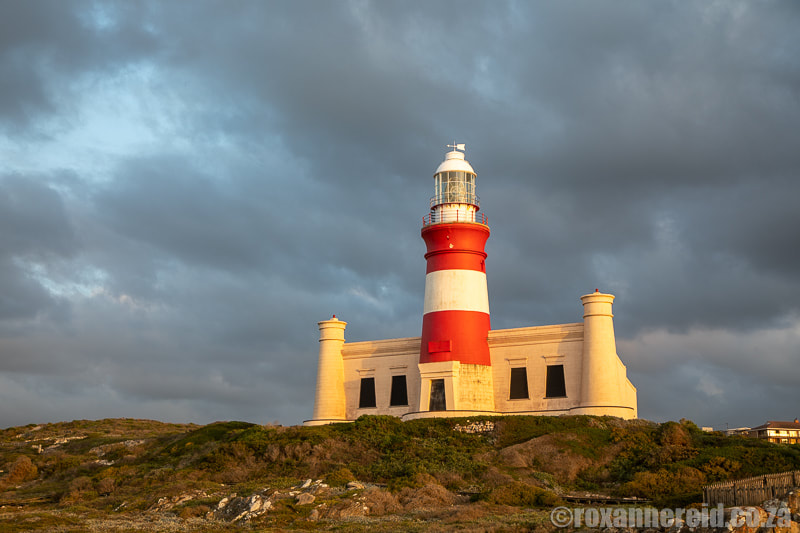
Cape Agulhas lighthouse
Here are some places worth visiting on your way to or from Arniston.
You may also enjoy
15 things to do at De Hoop Nature Reserve
20 things to do in Malgas in the Overberg
Like it? Pin this image!
- L’Agulhas – southernmost tip of the continent of Africa with its lighthouse, and the Agulhas National Park (about 45km away)
- Elim – see Why to visit the Moravian village of Elim (about 60km away)
- Stanford – see 17 things to do in Stanford (about 90km away)
- Gansbaai and the Danger Point lighthouse – see Things to do in Gansbaai (about 100km away)
- Hermanus – see 17 things to do in Hermanus (about 115km away)
You may also enjoy
15 things to do at De Hoop Nature Reserve
20 things to do in Malgas in the Overberg
Like it? Pin this image!
 |  |
Copyright © Roxanne Reid - No words or photographs on this site may be used without written permission from roxannereid.co.za