By Roxanne Reid
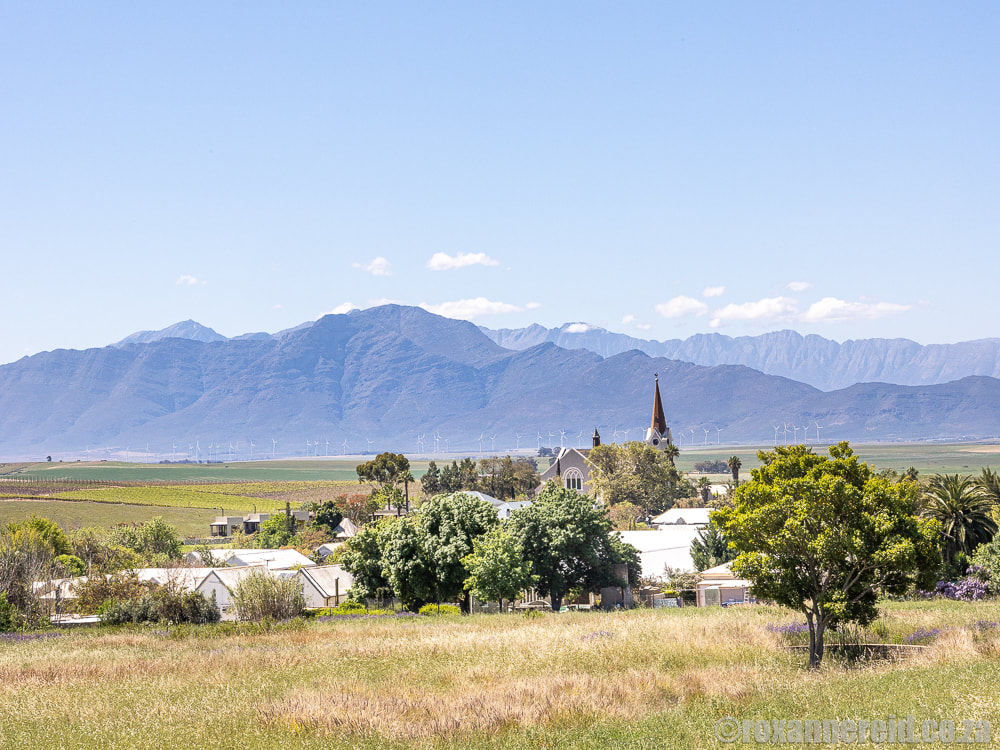
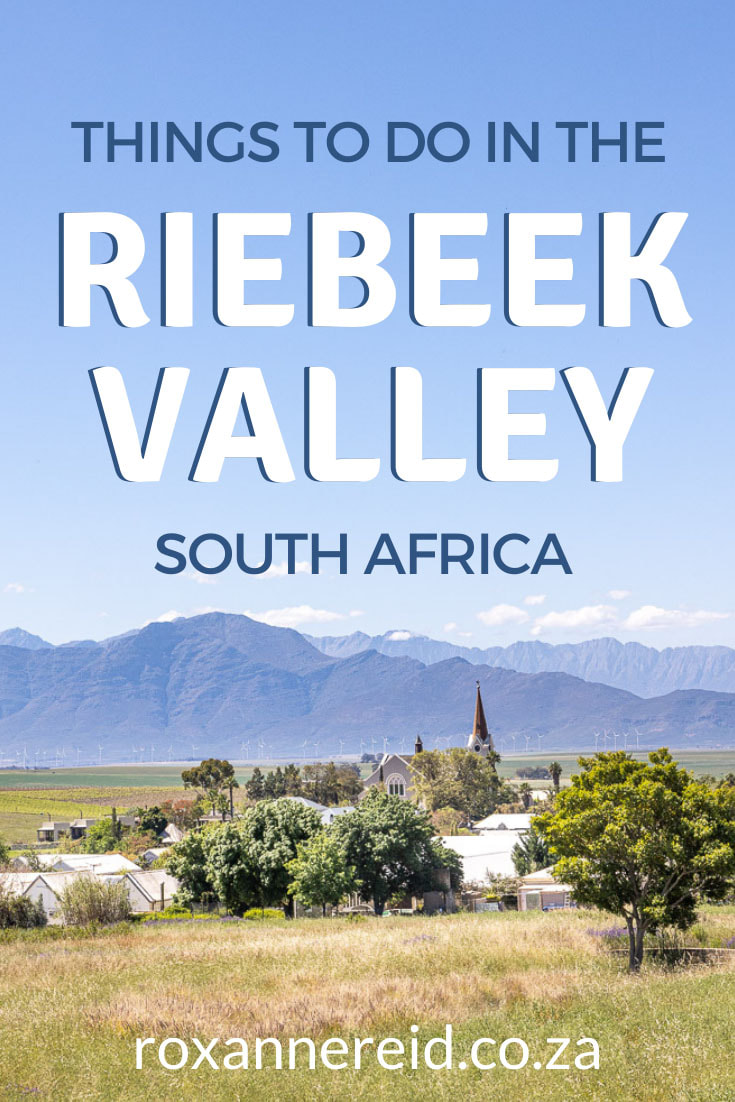
The history of Riebeek Kasteel and the wider Riebeek Valley in the Swartland goes back a long way, as stone-age tools and KhoiSan art found in the mountains around it show. But today it’s a much-loved weekend getaway for Capetonians. Here’s my pick of things to do in Riebeek Kasteel and the Riebeek Valley.
The history of Riebeek Kasteel and the wider Riebeek Valley in the Swartland goes back a long way, as stone-age tools and KhoiSan art found in the mountains around it show. But today it’s a much-loved weekend getaway for Capetonians. Here’s my pick of things to do in Riebeek Kasteel and the Riebeek Valley.
1. Visit the wine farms
Kloovenburg Winery
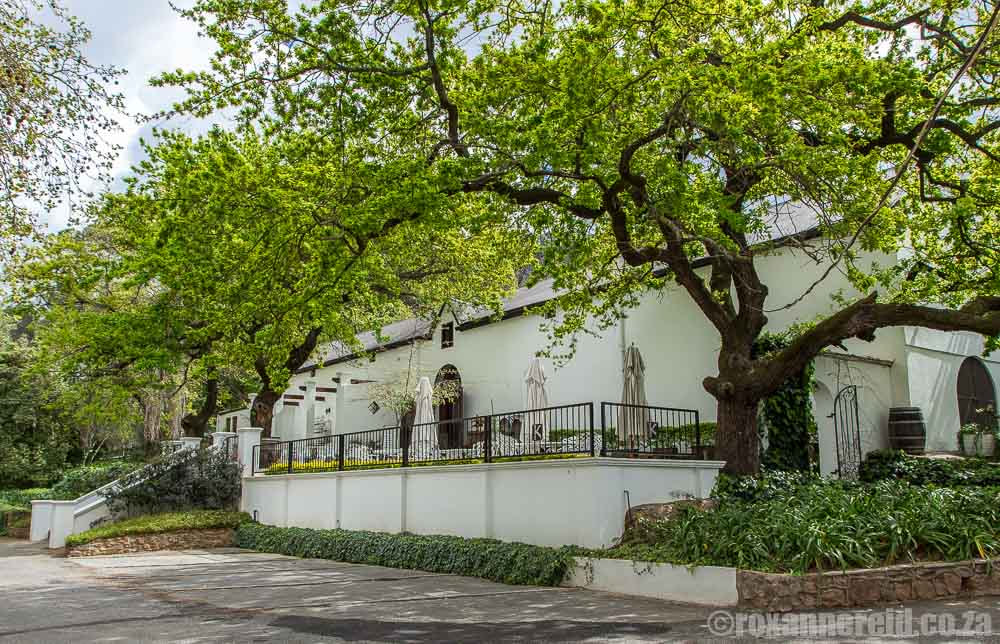
The original wine cellar at Kloovenburg is now a tasting room. Kloovenburg grows sauvignon blanc on the mountain slopes, apparently the highest bloc of sauvignon blanc in the Swartland, which is good for the cultivar because it’s cooler. The Eight Feet white and red blends are named for the four young sons of the family who used to love helping to stomp the grapes.
You can also do an olive tasting at Kloovenburg or book a picnic from Kringe Inni Bos next door to the tasting centre. Collect your food and drink from a kiosk and park off at one of the picnic pods under the trees. There’s a playground for kids too.
Kloovenburg Pastorie, originally the pastorie for the Dutch Reformed church (see point 10), also provides Riebeek Kasteel accommodation.
At Pulpit Rock at the foot of the Kasteelberg the young woman dealing with us just told us which wine she’d poured, then left us to ourselves. I missed a bit of chat about the wines, their growing conditions and their flavours. She later confessed she was fairly new, so perhaps by the time you visit things will be better. They have three ranges, the budget Stories collection, the Brink Family Vineyards range, and the Louisa collection that includes an MCC, a red blend and a fortified dessert wine.
If you’re in the mood for more wine, try Allesverloren, the oldest wine farm in the Riebeek Valley. It’s best known for reds – including cultivars like shiraz, touriga nacional and tinta barocca – and for its port. Or perhaps Meerhof, which has one of the finest views from a hilltop looking down into the valley. You’ll find a range of whites, reds and rosé to taste. They also make a dessert wine called Mooistrooi with pineapple and citrus flavours. Each of these estates also has a restaurant. Marras Wines has recently opened a new tasting centre in Riebeek West where you can also get burgers, pizzas, steaks and salads. Mullineux & Leeu Wines do tastings on the first Friday of the month for those who book ahead.
2. Taste craft beer
You can also do an olive tasting at Kloovenburg or book a picnic from Kringe Inni Bos next door to the tasting centre. Collect your food and drink from a kiosk and park off at one of the picnic pods under the trees. There’s a playground for kids too.
Kloovenburg Pastorie, originally the pastorie for the Dutch Reformed church (see point 10), also provides Riebeek Kasteel accommodation.
At Pulpit Rock at the foot of the Kasteelberg the young woman dealing with us just told us which wine she’d poured, then left us to ourselves. I missed a bit of chat about the wines, their growing conditions and their flavours. She later confessed she was fairly new, so perhaps by the time you visit things will be better. They have three ranges, the budget Stories collection, the Brink Family Vineyards range, and the Louisa collection that includes an MCC, a red blend and a fortified dessert wine.
If you’re in the mood for more wine, try Allesverloren, the oldest wine farm in the Riebeek Valley. It’s best known for reds – including cultivars like shiraz, touriga nacional and tinta barocca – and for its port. Or perhaps Meerhof, which has one of the finest views from a hilltop looking down into the valley. You’ll find a range of whites, reds and rosé to taste. They also make a dessert wine called Mooistrooi with pineapple and citrus flavours. Each of these estates also has a restaurant. Marras Wines has recently opened a new tasting centre in Riebeek West where you can also get burgers, pizzas, steaks and salads. Mullineux & Leeu Wines do tastings on the first Friday of the month for those who book ahead.
2. Taste craft beer
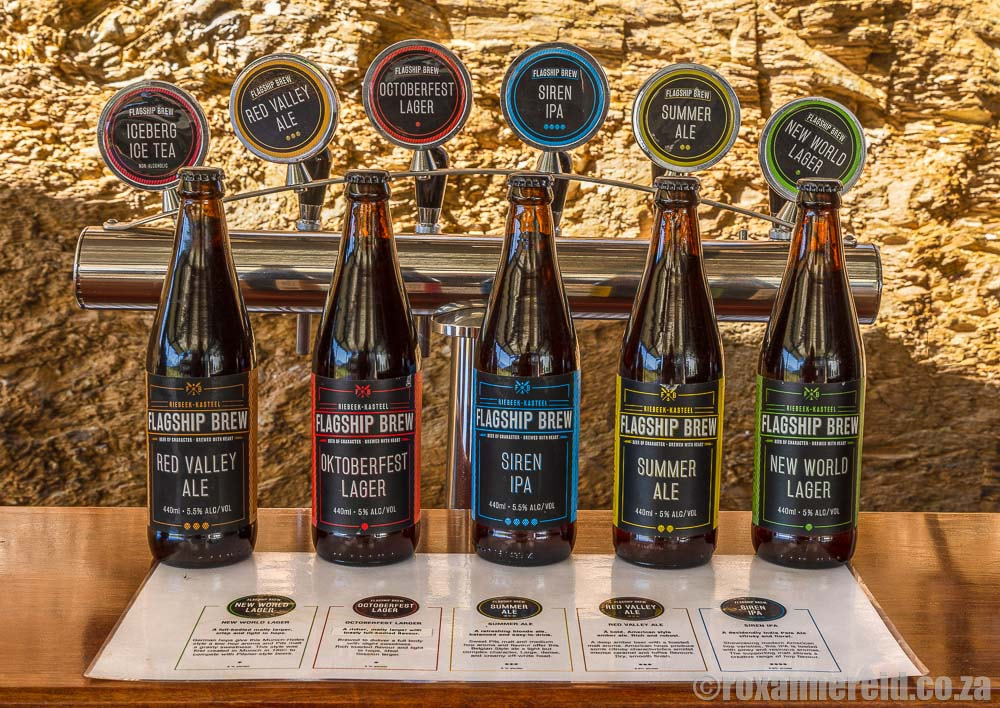
Taste craft beers
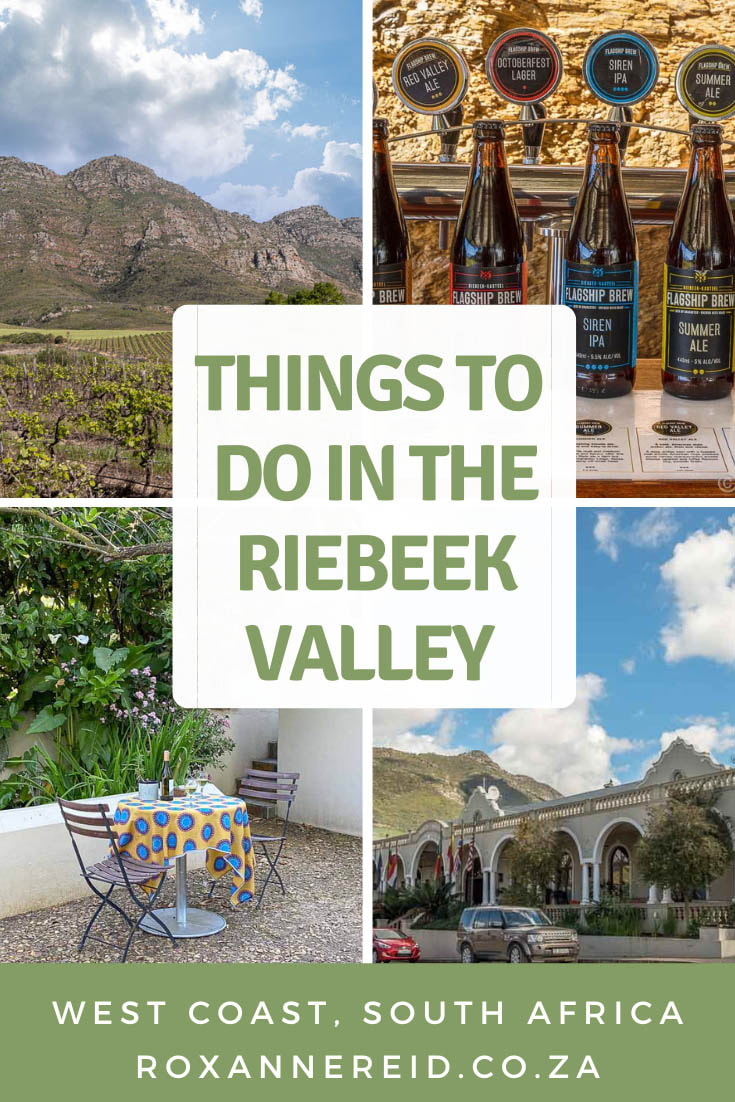
Flagship Brew craft brewery has moved from its canary-coloured home in the village of Riebeek Kasteel up to the Meerhof wine farm on the Bothmaskloof Pass (R46) just outside town. Visit for a tasting of their five beers and for the views over the valley. The beers – on tap or in bottles to take away with you – include a New World Lager, Oktoberfest Lager, Summer Ale (Belgian blonde ale), the robust Red Valley Ale and the hoppy Siren IPA.
3. Taste olives and olive oils
3. Taste olives and olive oils
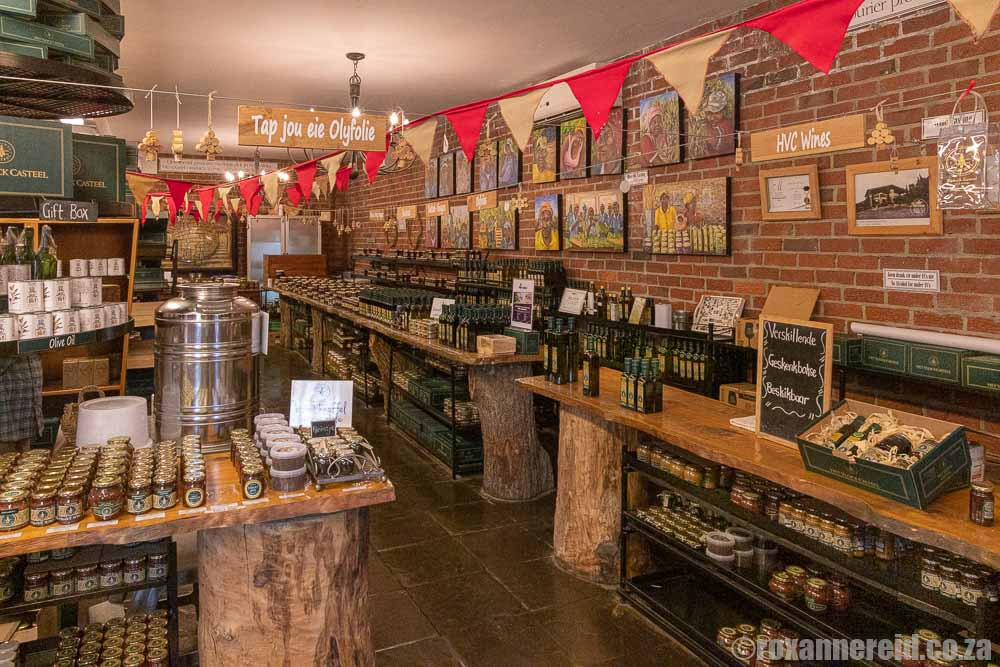
Lots of choices at Het Vlock Casteel olive farm
Olive tasting in the Riebeek Valley is seriously tasty business. When the Riebeek Valley Olive Festival launched in 2001, just 2000 people turned up; by 2016 the number had shot up to about 20 000. Sadly, the festival had to be cancelled in 2020 and 2021 because of the pandemic, and the 2022 festival has been postponed indefinitely, but there are hopes to get it up and running again once it’s safe to do so. It’s usually held in May.
My favourite olive tasting in Riebeek Kasteel has to be at Het Vlock Casteel in Kerk Street, in a villa with hint of Tuscany about it and great views from the upper courtyard. They have the widest range of olives and olive oil products I’ve ever seen. The informed olive tasting includes 10-12 products, both green and black olives, as well as dried olives, smoked olives, olives with flavours of balsamic, fig, pomegranate, chilli or lemon. There’s a host of other products in the shop, including olive relish, olive chutney, olive oil soap, and more. They produce various single cultivar extra virgin olive oils (think mission, frantoio, leccino and coratina) and a blend that is their flagship. Het Vlock Casteel is also a popular wedding venue.
Or visit the Olive Boutique opposite to discover delicious bottled olives from a much smaller producer. My favourite kalamatas were in blueberry dressing, or with rosemary and garlic. You can try a range of different olive oils, from light/delicate (much loved by South Africans and Australians) to coratina intense, which is the choice of serious tasters in the Mediterranean. There’s also a range of olive oil bodycare products.
Kloovenburg (see point 1) and Goedgedacht (see point 17) also produce olives.
4. Visit Jan Smuts’ birthplace
My favourite olive tasting in Riebeek Kasteel has to be at Het Vlock Casteel in Kerk Street, in a villa with hint of Tuscany about it and great views from the upper courtyard. They have the widest range of olives and olive oil products I’ve ever seen. The informed olive tasting includes 10-12 products, both green and black olives, as well as dried olives, smoked olives, olives with flavours of balsamic, fig, pomegranate, chilli or lemon. There’s a host of other products in the shop, including olive relish, olive chutney, olive oil soap, and more. They produce various single cultivar extra virgin olive oils (think mission, frantoio, leccino and coratina) and a blend that is their flagship. Het Vlock Casteel is also a popular wedding venue.
Or visit the Olive Boutique opposite to discover delicious bottled olives from a much smaller producer. My favourite kalamatas were in blueberry dressing, or with rosemary and garlic. You can try a range of different olive oils, from light/delicate (much loved by South Africans and Australians) to coratina intense, which is the choice of serious tasters in the Mediterranean. There’s also a range of olive oil bodycare products.
Kloovenburg (see point 1) and Goedgedacht (see point 17) also produce olives.
4. Visit Jan Smuts’ birthplace
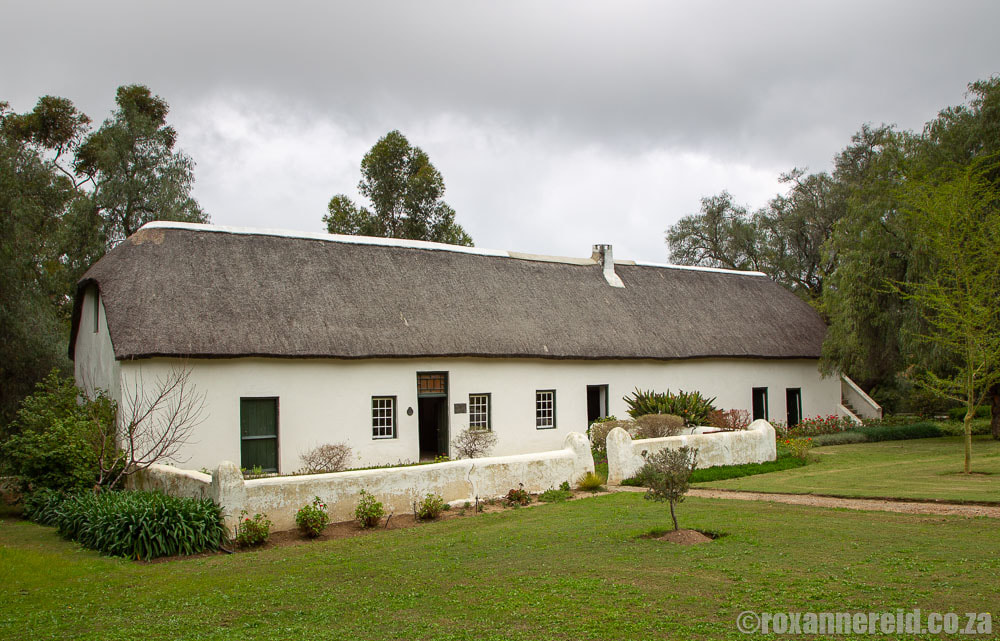
Jan Smuts' birthplace in Riebeek West
The lovely old Cape Dutch house where Jan Smuts was born in 1870 was once on a farm called Ongegund in Riebeek West, a few kilometres down the drag from Riebeek Kasteel. Today it stands on property owned by a cement factory, but is still well worth a visit. It’s furnished as it would have been when Smuts lived here till the age of eight. There are dung floors and rietdak ceilings in the kitchen and passage, a separate building depicting his military and political life. But there’s always the sound of grinding from the cement factory, the taste of cement dust on your tongue. A self-professed ‘son of the veld’, Oom Jan wouldn’t want to live here now.
5. Hike the Kasteelberg
5. Hike the Kasteelberg
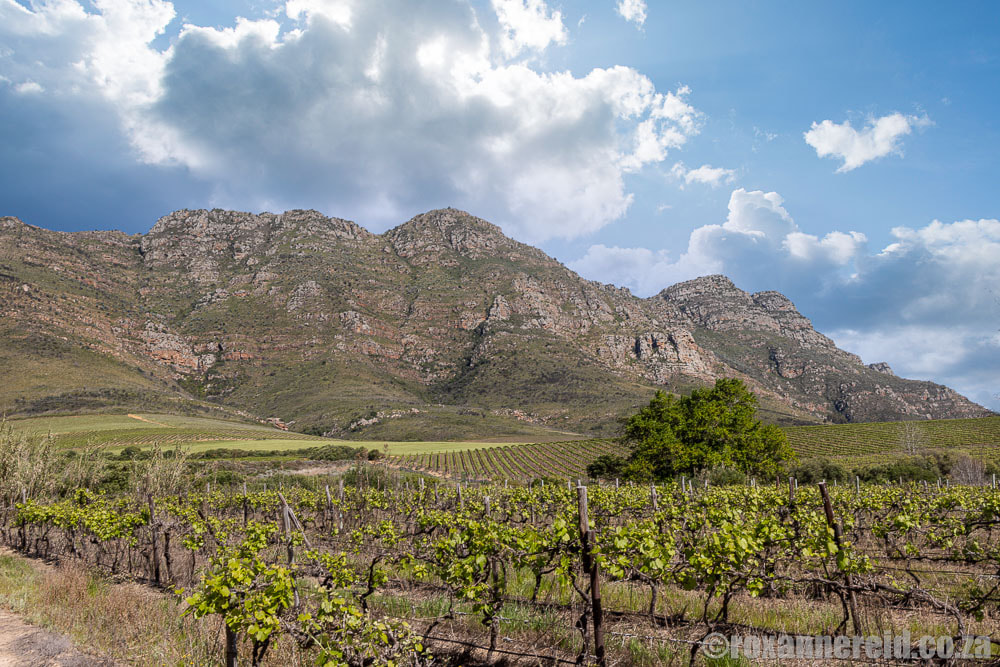
Go for a hike to the top of the Kasteelberg for great views over the Riebeek Valley
If you’re a keen hiker you won’t be able to resist the challenge of making it to the top of the Kasteelberg to look out over the valley. A trail starts behind Pulpit Rock winery at about 248m above sea level and continues for 2km to around 850m. It’s not a hike to be taken lightly, so be sure you’re fit for five hours or more to get to the top and back. Let someone know where you’re going. Take sun protection and lots of water. Don’t go alone and don’t overdo it, rather turn back. Wear proper hiking boots rather than takkies. Download a map here.
6. Sit on the longest stoep south of the Limpopo
6. Sit on the longest stoep south of the Limpopo
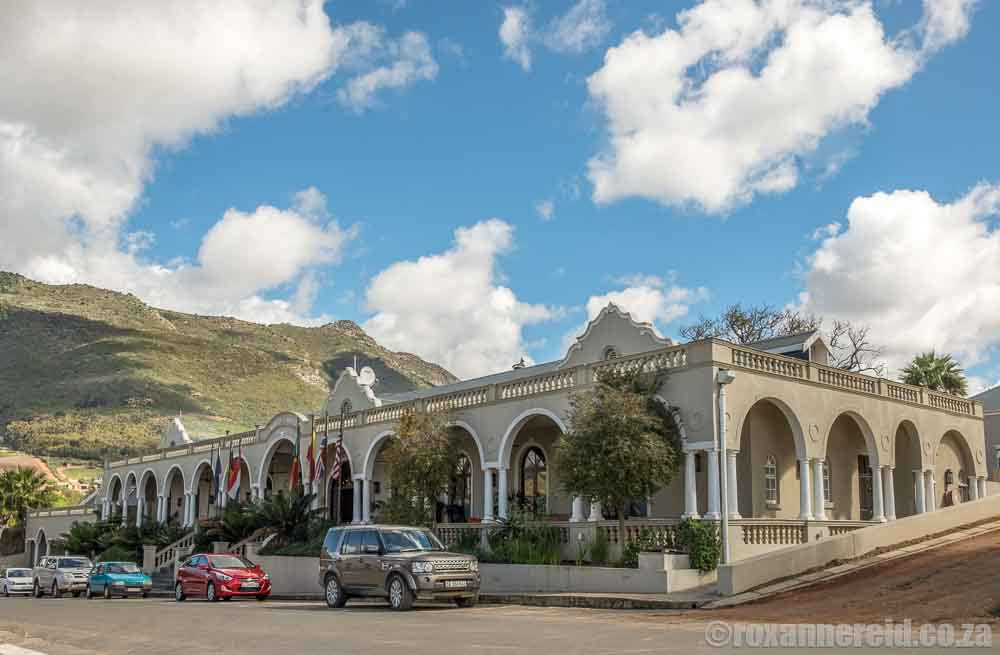
The Royal Hotel in Riebeek Kasteel
Riebeek Kasteel’s Royal Hotel claims to be the oldest hotel in the Western Cape with the longest stoep south of the Limpopo. It has its origins in the mid-1800s and the date inscribed on the gable is 1862, but the facade we see today was only built in the 1920s. (Pedantic people might point out that the Houwhoek Hotel, between Elgin and Bot River, was licensed in 1834 and is certainly older, although to be fair it did start out life as an inn rather than a hotel.) History aside, The Royal is a great place for tea or gin-and-tonics on that impressive stoep while you watch the world go by. There’s also a restaurant that’s well-rated on TripAdvisor, although we haven't eaten there.
7. Enjoy the Short Street precinct
7. Enjoy the Short Street precinct
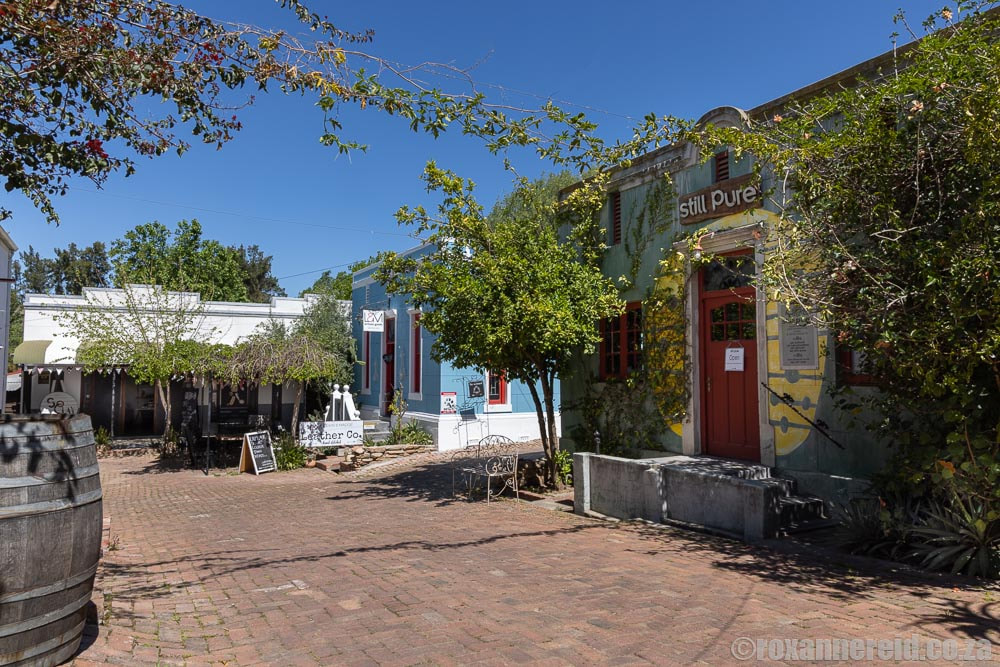
The quaint Short Street precinct, Riebeek Kasteel
Opposite the Royal Hotel you’ll find what looks like a collection of old buildings in a small square. Called Short Street, its Karoo-style architecture was in fact only built in the early 2000s, an inspired plan to create what has turned out to be one of Riebeek Kasteel’s most visited tourist attractions. Here you’ll find a Tasting Emporium, a clothing shop, one that sells essential oils, soaps and lotions, and a clay studio that merges gallery, shop and workshop. Visit the Lewis & Madge Leather Co or the Wine Kollective selling boutique wines of the Swartland. Other than the leather shop, which looks freshly painted and cared for, the buildings in this square are looking a little neglected and forlorn since the last time we saw them.
8. Admire a greenhouse and nursery
8. Admire a greenhouse and nursery
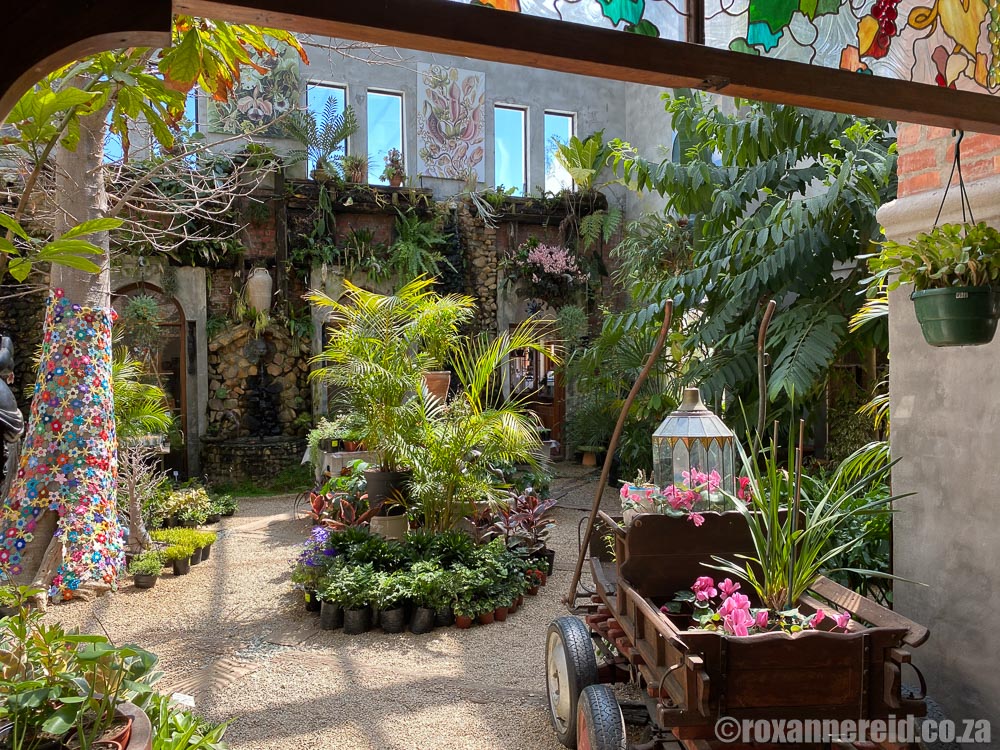
Inside the glorious greenhouse at the Riebeek Valley Garden Centre
Don’t miss a visit to the Riebeek Valley Garden Centre, or Die Boomhuis. You can’t miss the striking double-volume dark green building on the main road in Riebeek West. Even if you’re not planning to buy succulents, orchids or other well-fed plants, it’s worth visiting for the greenhouse alone. This main structure is dominated by a young baobab tree with colourful crocheted flowers on its base, by stained glass windows, moss-covered stone walls and tinkling waterfalls. Walk out back to browse the plants for sale and enjoy the shed with its old wooden wheelbarrow and metal rocking horse, a kicking metal bull out front. You might hear the crowing of a cock or see some hens scratching in an enclosure nearby. There’s also a gift shop and a coffeeshop called Krem a Tart that does breakfast, coffee, cake and light lunches.
9. Wander the streets
9. Wander the streets
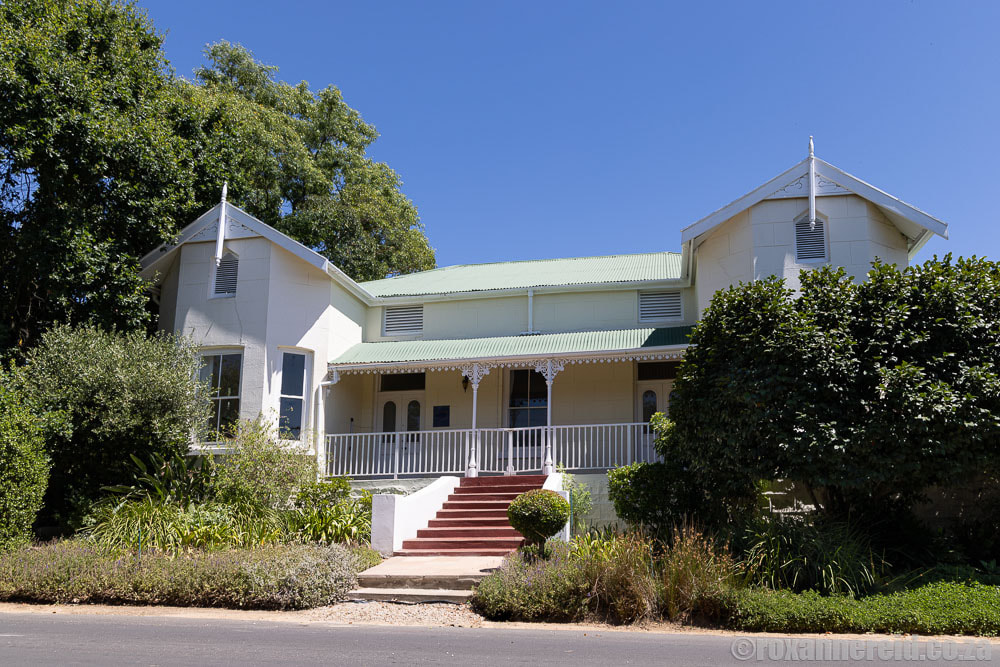
Lovely old buildings are thick on the ground in the Riebeek Valley
If you’re interested in architecture or pretty gardens make your heart happy, spend some time wandering the streets, either on foot or on your bike. There are some charming old buildings and houses in Riebeek Kasteel and Riebeek West. Some date back as far as the mid 1800s but perhaps my favourites are the grand old Victorians and Edwardians that hint at a much more elegant age. Some of these now offer accommodation, others are private homes but you can still enjoy looking at them over the garden fence; you might even meet a barking, tail-wagging dog or two.
10. Visit a museum in a church
10. Visit a museum in a church
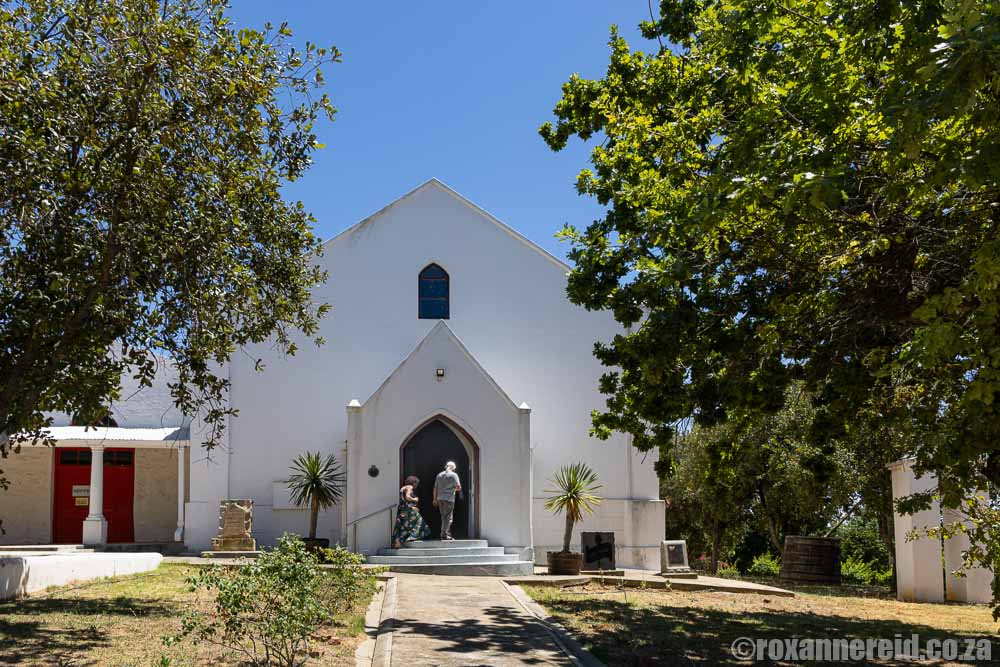
The small Riebeek Valley Museum
In Kerk Street you’ll find the Dutch Reformed Church that now serves as the Riebeek Valley Museum. Dating back to 1856, this national monument houses some old kitchen implements, farm equipment, sewing machines, carriages and other things that the Voortrekkers who came to the valley might have used. If you’re looking for ghosts, hang around the horse-drawn hearse and you might feel a chill. To bring the museum up to date and make it more inclusive, there’s a section on the forced removal of the Oukloof coloured community in 1965. About 60 families were moved, their homes, church and community facilities destroyed.
11. Eat at Riebeek Kasteel restaurants
There’s a number of restaurants in Riebeek Kasteel and the Riebeek Valley worth a stop. When we first visited Beans About Coffee in Fontein Street, Riebeek Kasteel, the roastery was in a room next door. But things have grown since then and the roastery has moved offsite. You can still enjoy a good cuppa using freshly ground beans from around the world. They do breakfasts, toasties and light lunches like quiches and burgers too. Their chicken mayo toastie on seed bread was super filling and I washed it down with an iced coffee with condensed milk – great on a meltingly hot day. There are mid-morning pick-me-ups in the form of carrot cake and cheesecake too.
11. Eat at Riebeek Kasteel restaurants
There’s a number of restaurants in Riebeek Kasteel and the Riebeek Valley worth a stop. When we first visited Beans About Coffee in Fontein Street, Riebeek Kasteel, the roastery was in a room next door. But things have grown since then and the roastery has moved offsite. You can still enjoy a good cuppa using freshly ground beans from around the world. They do breakfasts, toasties and light lunches like quiches and burgers too. Their chicken mayo toastie on seed bread was super filling and I washed it down with an iced coffee with condensed milk – great on a meltingly hot day. There are mid-morning pick-me-ups in the form of carrot cake and cheesecake too.
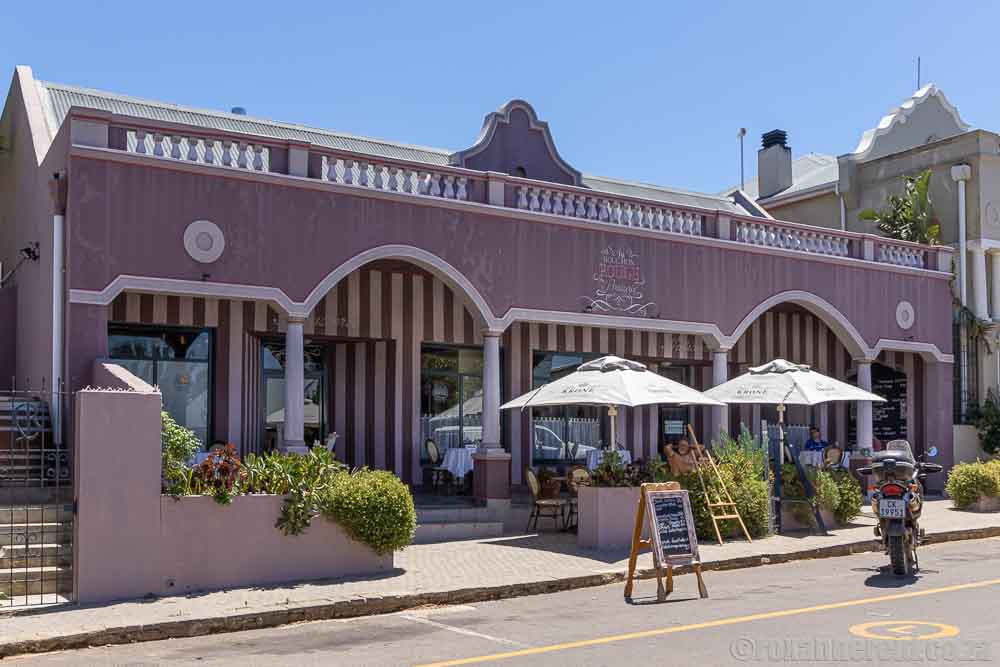
Au Bouchon Rouge in Riebeek Kasteel
Au Bouchon Rouge Brasserie & Patisserie next to the Royal Hotel, painted in mauve and white stripes, looked so inviting that we stopped for lunch. The chef is French so you’ll find things like garlic snails and pan bagnat on the blackboard menu, as well as prawns and steaks. We chose the linefish and it came with potato dauphinoise and ratatouille. The best place to sit to watch village life go by is on the stoep with its cane chairs and white tablecloths, reminiscent of a French pavement café.
The Barn on Kerk Street in Riebeek Kasteel is where the coffee roastery is now (it’s owned by the same folks as Beans about Coffee). The best thing here is to sit outside and enjoy the view out over Riebeek Kasteel and to the mountains lying blue along the horizon. We enjoyed a lunch of slow-roasted lamb neck which was good, although the mash was served cold. I’m sure they would have rectified that, but we were too hungry to wait. Other menu items include steaks, burgers and salads.
The Barn on Kerk Street in Riebeek Kasteel is where the coffee roastery is now (it’s owned by the same folks as Beans about Coffee). The best thing here is to sit outside and enjoy the view out over Riebeek Kasteel and to the mountains lying blue along the horizon. We enjoyed a lunch of slow-roasted lamb neck which was good, although the mash was served cold. I’m sure they would have rectified that, but we were too hungry to wait. Other menu items include steaks, burgers and salads.
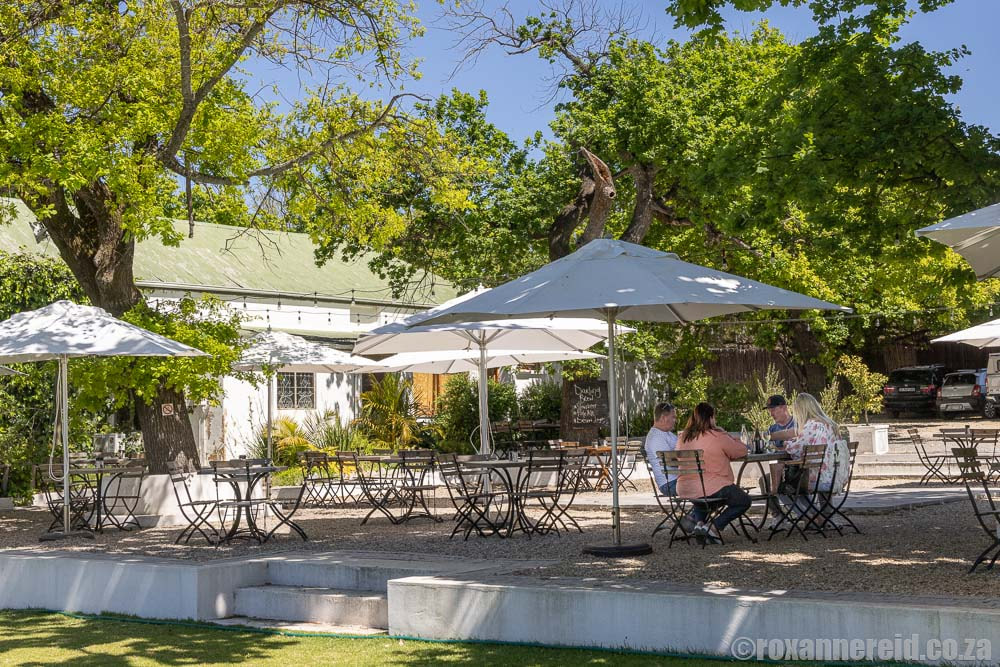
The terrace at the Barn in Riebeek Kasteel
A 150-year-old oak tree provides shade in the entrance courtyard of Café Felix and there’s seating here, inside or in the garden at the back. I remember a yummy slow-roasted lamb shank here a while back, but they also do steaks, pork belly, curry, lasagna, gourmet burgers and pizza.
Stop at Eight Feet Village, part of the Kloovenburg empire, even just for a cup of coffee while you enjoy the sweeping views over the valley from the Bothmaskloof Pass. The restaurant menu also offers salads, burgers, steaks, chicken and fish.
There’s a bunch of other eateries in the valley – look for names like La Parilla, Aardvark Eats, Bay Leaf & Thyme, Eve’s Eatery, The Red Tin Roof and Old Dalby.
12. Get arty
Stop at Eight Feet Village, part of the Kloovenburg empire, even just for a cup of coffee while you enjoy the sweeping views over the valley from the Bothmaskloof Pass. The restaurant menu also offers salads, burgers, steaks, chicken and fish.
There’s a bunch of other eateries in the valley – look for names like La Parilla, Aardvark Eats, Bay Leaf & Thyme, Eve’s Eatery, The Red Tin Roof and Old Dalby.
12. Get arty
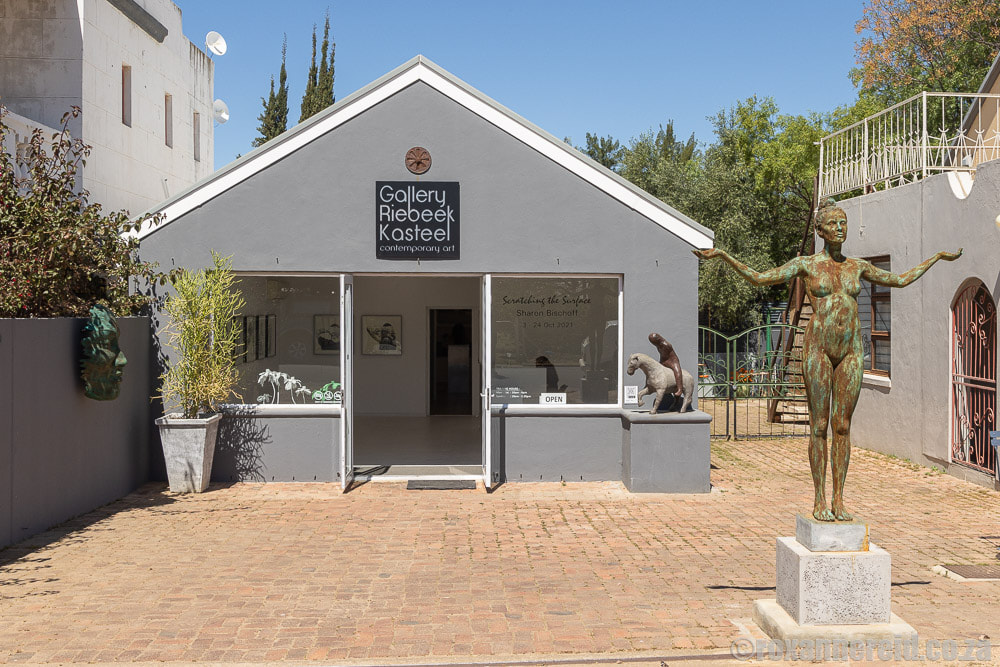
Art gallery in Riebeek Kasteel
If appreciating fine art is your thing, visit art galleries like Gallery 7 on Plein (in the same building as the tourist info centre), Gallery Riebeek Kasteel diagonally opposite the Royal Hotel, or the So Clay studio in Short Street. There are painters, quilters, sculptors, metal workers and other artists all over the Riebeek Valley, and sometimes they open their studios by appointment. The First Fridays event (see point 13) often includes art in some form and in fact Riebeek Kasteel styles itself as an Arts Town. An annual arts festival takes place in September.
13. Support First Fridays
First Fridays are held in Riebeek Kasteel from 17:00 to 20:00 on the first Friday of the month. Lots of people get involved, with shops and restaurants offering specials and discounts. A lucky packet of tastings, performances and exhibitions may be part of the event too. If you’re in town on the first Friday of the month, you’ll love hanging out with the locals.
14. Go shopping
13. Support First Fridays
First Fridays are held in Riebeek Kasteel from 17:00 to 20:00 on the first Friday of the month. Lots of people get involved, with shops and restaurants offering specials and discounts. A lucky packet of tastings, performances and exhibitions may be part of the event too. If you’re in town on the first Friday of the month, you’ll love hanging out with the locals.
14. Go shopping
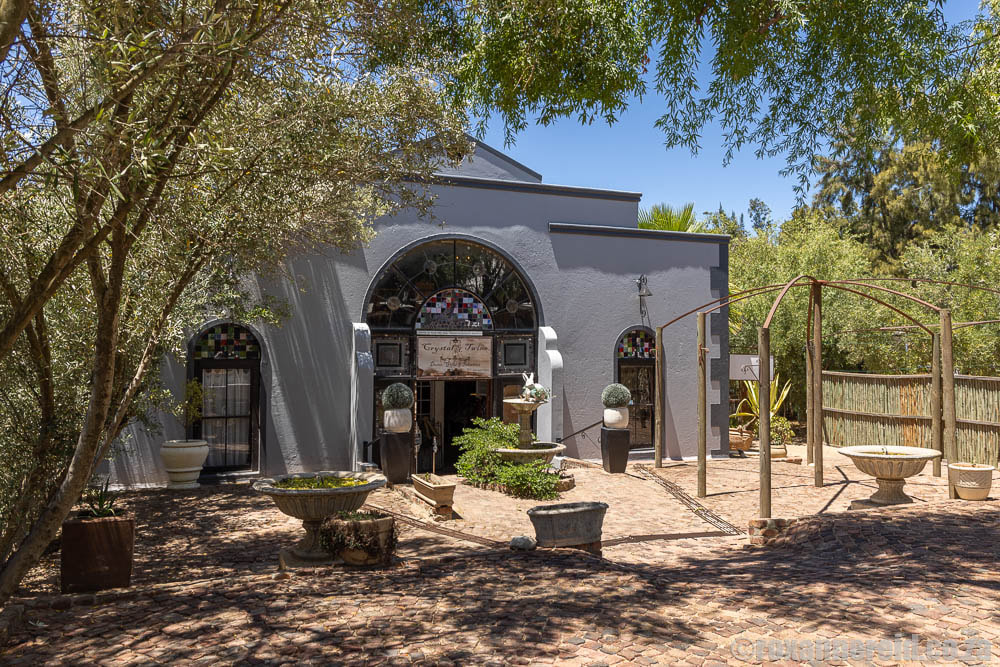
Crytal & Twine is just one of a host of cool shops in the Riebeek Valley
If you love browsing and shopping, you’ll love the wealth of cool little shops here. From fresh produce at The Biggest Little Market to boutique wines at the Wine Kollective, from gifts, crafts and soaps to knick-knacks, you’re spoilt for choice. I enjoyed a shop called Roes (which means Rust) that was crammed with vintage, art deco and other eclectic bits and bobs you might want for your home or garden. Crystal & Twine is another favourite for French-inspired home décor and gifts. Made in Riebeek (MIR) showcases handmade products by the talented people from the Riebeek Valley.
15. Visit the Riebeek Valley Village Market
A village market takes place in the village square in Riebeek Kasteel on the first Saturday morning of the month. Visit to find handmade arts and crafts, farm-fresh produce and homemade foods at a variety of outdoor stalls. Browse the art, plants and décor items while enjoying the friendly, happy vibe. There’s plenty to eat at the market or take away for later.
16. Go for a game drive
15. Visit the Riebeek Valley Village Market
A village market takes place in the village square in Riebeek Kasteel on the first Saturday morning of the month. Visit to find handmade arts and crafts, farm-fresh produce and homemade foods at a variety of outdoor stalls. Browse the art, plants and décor items while enjoying the friendly, happy vibe. There’s plenty to eat at the market or take away for later.
16. Go for a game drive
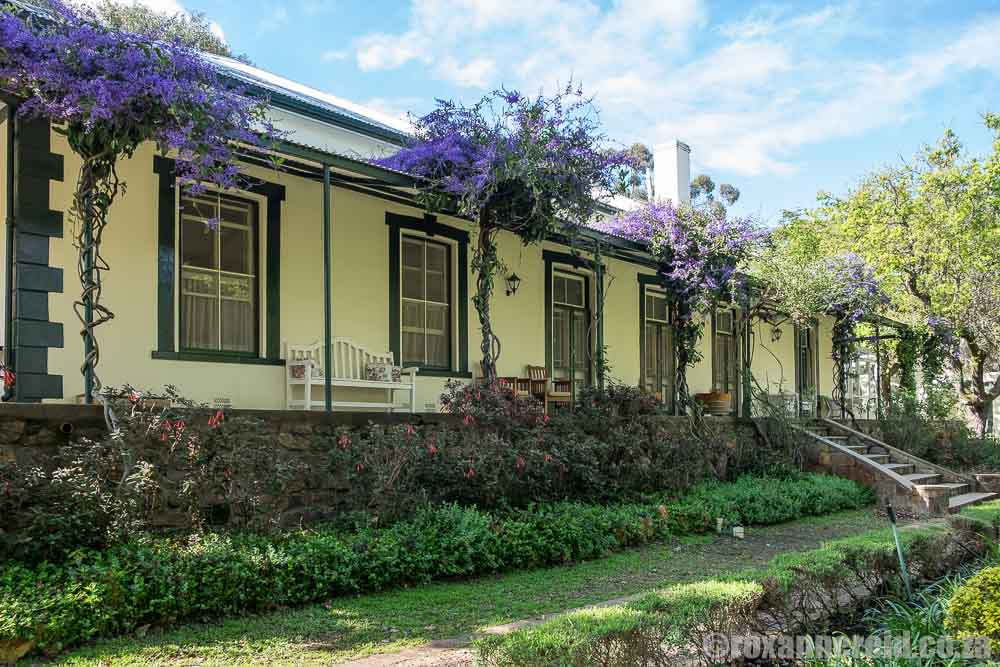
Beautiful old homestead at Bartholomeus Klip
Go for a game drive followed by brunch at Bartholomeus Klip, a country lodge on a working farm and nature reserve south-east of Riebeek Kasteel. Here responsible tourism holds sway, with a commitment to the environment and local community. We saw eland, bontebok, red hartebeest and zebra that looked a bit like quagga, with white rather than striped bums. Our guide said they’ve been trying to breed a quagga with DNA recovered from a quagga skin at Iziko museums. Now they’re using selective breeding to breed for fewer stripes. ‘There would need to be 50 breeding females to say it’s a viable breeding population,’ he said. ‘We have fewer than that and they’re more Burchell’s than quagga.’
A devastating fire in the nature reserve in 2012 killed about 300 geometric tortoises, one of the world’s rarest reptiles. An exclusion plot was set up for the survivors, electrified to protect them from crows, feral pigs and baboons. Hatchlings are monitored in a separate camp. ‘They’re about the size of a R5 coin when they’re born,’ said the guide. The survival rate here is about 20 a year so it is taking a long time to replace the 300 lost in the fire.’ They’re fully grown at about 6-7 years and live to about 30.
Your guide will point out plants as well as animals. The nature reserve consists of fynbos and renosterveld and has ten red data plant species, four of them endemics. It was declared a natural heritage site in 1988.
17. Support a community development trust
A devastating fire in the nature reserve in 2012 killed about 300 geometric tortoises, one of the world’s rarest reptiles. An exclusion plot was set up for the survivors, electrified to protect them from crows, feral pigs and baboons. Hatchlings are monitored in a separate camp. ‘They’re about the size of a R5 coin when they’re born,’ said the guide. The survival rate here is about 20 a year so it is taking a long time to replace the 300 lost in the fire.’ They’re fully grown at about 6-7 years and live to about 30.
Your guide will point out plants as well as animals. The nature reserve consists of fynbos and renosterveld and has ten red data plant species, four of them endemics. It was declared a natural heritage site in 1988.
17. Support a community development trust
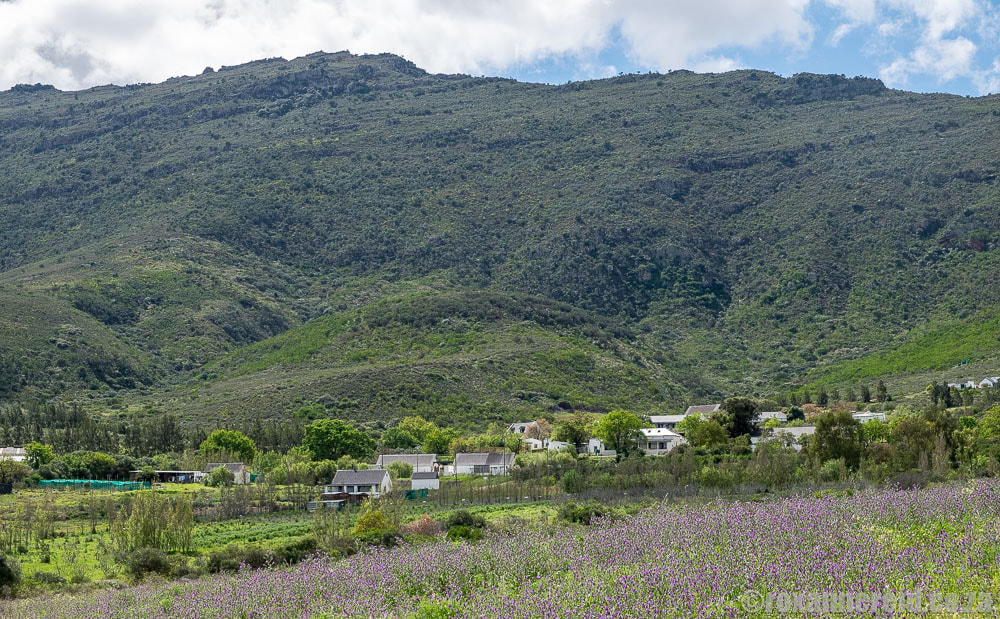
Goedgedacht olive farm in the Riebeek Valley
Goedgedacht off the R46 near Riebeek Kasteel is an olive farm with a difference. At its heart is a community development trust devoted to tackling climate change and poverty among rural youngsters. The farm has more than 13 000 olive trees and income from the olives and olive oil, together with hefty fund-raising campaigns, helps to run the Path out of Poverty programme that feeds and mentors young people. They reach thousands of people a year, and also have environmental, youth leadership and microenterprise programmes.
Visit the farm to buy Goedgedacht olive oil (you can also find it at Woolies and Pick n Pay), walk in the the Olive Peace Grove, enjoy tea in a tree, or stay over in the accommodation. It’s popular for weddings and retreats.
18. Stay at Riebeek Kasteel accommodation
Visit the farm to buy Goedgedacht olive oil (you can also find it at Woolies and Pick n Pay), walk in the the Olive Peace Grove, enjoy tea in a tree, or stay over in the accommodation. It’s popular for weddings and retreats.
18. Stay at Riebeek Kasteel accommodation
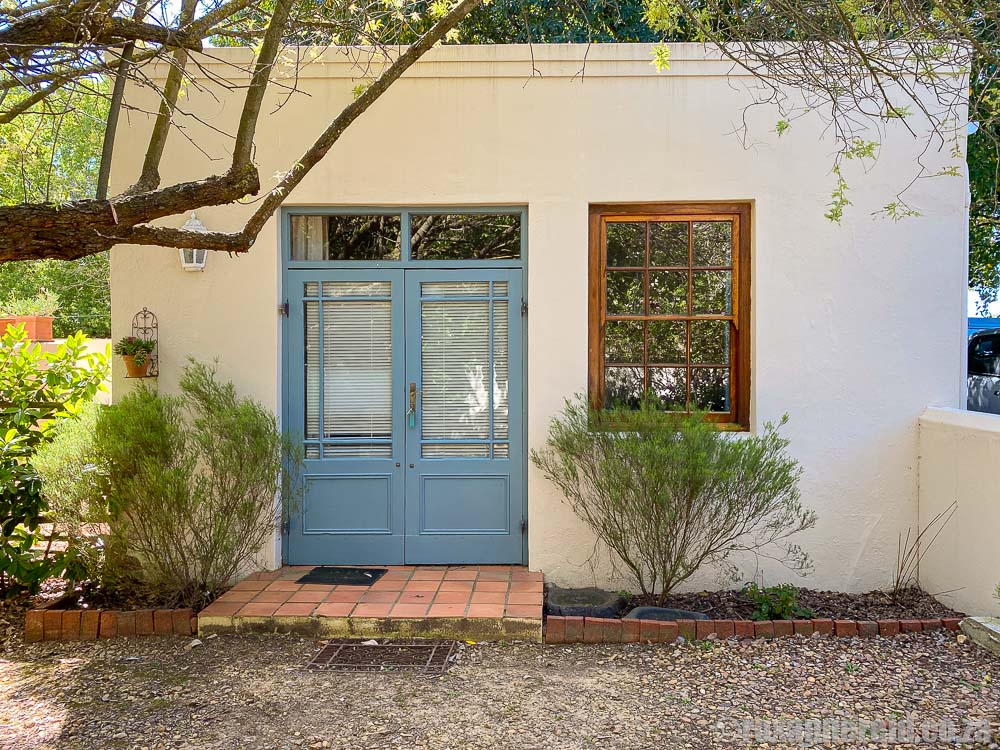
Cute little self-catering cottage accommodation in Riebeek Kasteel
There are pots of places that offer accommodation in Riebeek Kasteel and the Riebeek Valley. They range from self-catering and B&B to full-service lodges and hotels (see point 6), from historic or romantic to modern, from budget-friendly to luxurious. With so much to do in the valley, you simply have to stay for at least a night or two so you can enjoy it all.
Best time to visit Riebeek Kasteel & the Riebeek Valley
The climate in the valley is similar to the northern coast of the Mediterranean, but summers (October to March) are definitely hotter than Cape Town to the south, high 20s and into the 30s being quite common, low 40s not unknown. Luckily, it’s less humid than Cape Town, making the higher temperatures more bearable. Winter nights can get down to about 6 or 7 degrees Celsius. Most of the rain falls in winter, with some 60% of it between May and August.
Because of how near to Cape Town the valley is, there’s a very different feel when Capetonian weekenders flood the valley. It’s also a popular wedding venue, so Riebeek Kasteel gets especially busy then. If you prefer a more laidback vibe where it’s just you and the locals, try to visit during the week when it’s calmer but be aware that some shops and restaurants may be closed. Also, keep your eye on the timing of festivals like the Olive Festival (May) and Art Festival (September) when you’re choosing your time to visit; these will be busier and you’ll need to book your accommodation far in advance to have a wider choice.
Where to find it
Riebeek Kasteel lies about 95km north-east of Cape Town via the N7 and R46. Riebeek West is only another 6km further north.
You may also enjoy
17 things to do in Tulbagh, Cape Winelands
20 things to do in Darling, Western Cape
Like it? Pin this image!
Best time to visit Riebeek Kasteel & the Riebeek Valley
The climate in the valley is similar to the northern coast of the Mediterranean, but summers (October to March) are definitely hotter than Cape Town to the south, high 20s and into the 30s being quite common, low 40s not unknown. Luckily, it’s less humid than Cape Town, making the higher temperatures more bearable. Winter nights can get down to about 6 or 7 degrees Celsius. Most of the rain falls in winter, with some 60% of it between May and August.
Because of how near to Cape Town the valley is, there’s a very different feel when Capetonian weekenders flood the valley. It’s also a popular wedding venue, so Riebeek Kasteel gets especially busy then. If you prefer a more laidback vibe where it’s just you and the locals, try to visit during the week when it’s calmer but be aware that some shops and restaurants may be closed. Also, keep your eye on the timing of festivals like the Olive Festival (May) and Art Festival (September) when you’re choosing your time to visit; these will be busier and you’ll need to book your accommodation far in advance to have a wider choice.
Where to find it
Riebeek Kasteel lies about 95km north-east of Cape Town via the N7 and R46. Riebeek West is only another 6km further north.
You may also enjoy
17 things to do in Tulbagh, Cape Winelands
20 things to do in Darling, Western Cape
Like it? Pin this image!
 |  |
Copyright © Roxanne Reid - No words or photographs on this site may be used without permission from roxannereid.co.za