Roxanne Reid - Africa Addict
  • Home
  • Book author
    • Travels in the Kalahari >
      • Photo gallery: Travels in the Kalahari
      • Book reviews: Travels in the Kalahari
    • A Walk in the Park >
      • Photo gallery: A Walk in the Park
      • Book reviews: A Walk in the Park
    • The Essential Guide to Self-Editing >
      • Book reviews: Essential Guide to Self-Editing
    • Betrayed
    • Book reviews online
  • Editing & proofreading
  • In the media
    • Travel features
    • Health features
    • Online media
  • Blog
  • Testimonials
  • Links
  • Contact

18 things to do at Mokala National Park

16/6/2026

24 Comments

 
Buffaloes at waterhole, Mokala National Park
By Roxanne Reid
Tucked away off the N12, about 75km southwest of Kimberley in the Northern Cape, Mokala is a malaria-free protected area that makes an ideal stopover on a road trip between Cape Town and Joburg. But don’t rush your visit; stay at least two or three nights to surrender to its magic and explore some of these things to do in Mokala National Park​.


​Mokala National Park is one of SANParks’ best-kept secrets, a place of space, solitude and surprises. Unlike South Africa’s more crowded parks, it offers a quieter, less hectic bush experience, where wide open landscapes of koppies, plains and riverine vegetation stretch as far as the eye can see.

Although Mokala is the Setswana word for a camelthorn tree – and there are certainly lots of those around – the park is perhaps best known for being a sanctuary to endangered species like roan, sable and tsessebe, which it was established in 2007 to protect.

If you love the Kgalagadi Transfrontier Park, you’ll be pleased to see lots of the same red Kalahari sand and thorn trees here, though you won’t find lions or cheetahs. And, to be honest, we find it a more peaceful experience without the kind of people who focus solely on finding big cats without appreciating all the rest.

But perhaps my favourite thing is that Mokala is the only park in the SANParks stable where you can stay in a treehouse – officially called a tree-top cottage (see more about these in point 16).

1. Go on a self-drive safari
Things to do in Mokala National Park: self-drive to find roan antelope
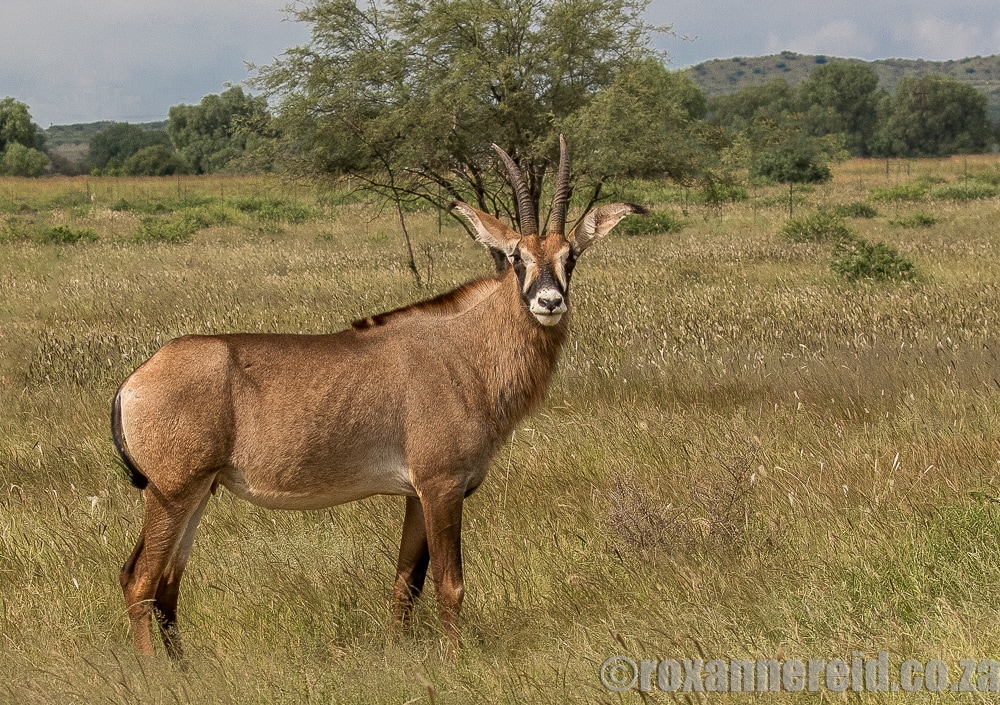
Roan antelope is one of the endangered animals protected here
Mokala National Park is the place to go in search of endangered animals like tsessebe, roan and sable antelope. It’s also a good place to see aardwolf and aardvark, especially if you go on a guided sunset/night drive (see point 2). In all, there are 44 species of mammals here. Others you can expect to find include Cape buffalo, giraffe, warthog, wildebeest, Burchell’s/Plains zebra, gemsbok, kudu, eland, red hartebeest, klipspringer, grey duiker, brown hyena, black-backed jackal, African wild cat, and meerkat. That fiercest of small predators, the black-footed cat, also makes a home here but you’d be extremely lucky to see it. There are no lions, cheetahs, elephants, or wild dogs so people who come here tend to be lovers of all wildlife rather than visitors on their first safari.

For your best chance of seeing the endangered roan and sable antelope, combine the Doornlaagte Loop in the central section of the park with the Kameeldoring Loop. Sadly, both these loops – and especially Doornlaagte – might be closed after heavy rain, to allow time to repair damage (see more about this in point 11 of ‘Useful tips’ below).

2. Join a guided game drive
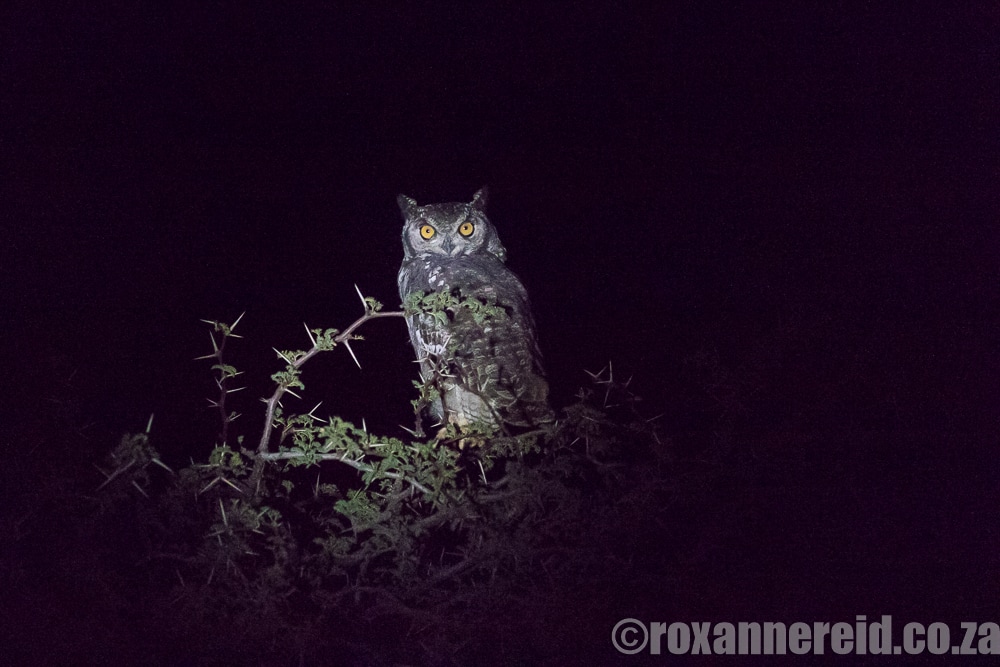
Spotted eagle-owl, Mokala
Night drives are a good time to find owls
Join a guided early morning game drive at Mokala for a chance to see some of the park’s rarities like roan, sable, or aardwolf. Your guide’s ability to spot animals is usually better than yours and he’s a source of other interesting info too, like the differences between Mokala’s various thorn trees – camel thorn, umbrella thorn, black thorn, and more.

A sunset drive is your chance to see the landscape soften as the sun sets. You might also see owls, genet, porcupine, brown hyena, hares, jackal, bat-eared fox, African wild cat, and caracal – even aardvark or aardwolf. In fact, the very first aardvark we ever saw was after dark on a sunset drive here at Mokala. The open safari vehicle will have a spotlight so take your binos and camera.

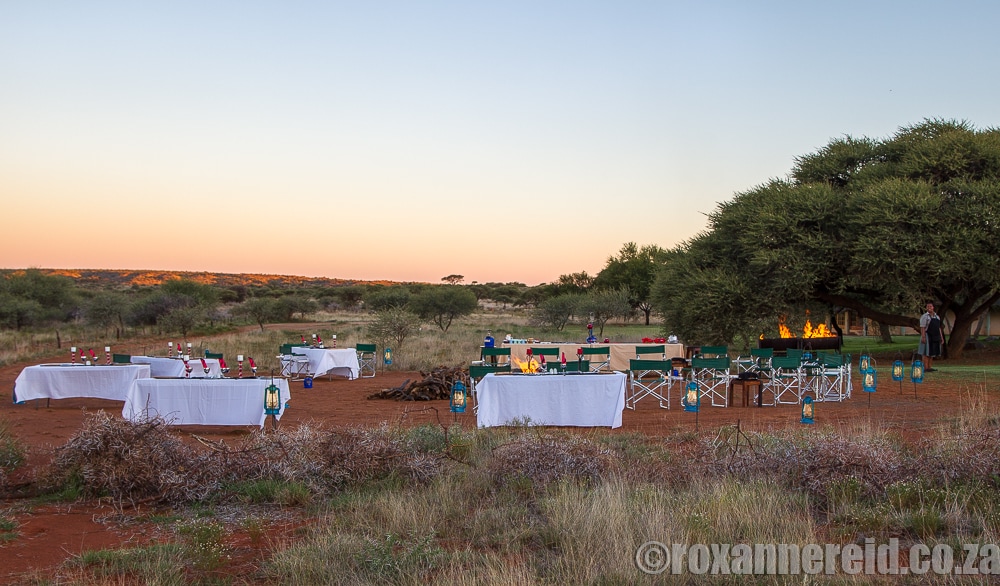
Mosu also offers bush braais, which start with a guided game drive followed by the superb experience of dining out in the bush. The minimum number of guests to secure a bush braai is five and you need to book two weeks ahead because all food for your bush braai needs to be bought especially beforehand since there’s no longer a restaurant in the park.

3. Take a guided drive to see San rock art 
Things to do in Mokala National Park: see San rock art, Mokala
San engraving of an elephant
If you’re interested in cultural heritage, ask about a guided drive to see some of the 2000-year-old rock engravings in the park. The art here is unusual because the San are usually associated with rock paintings and these are engravings, more usually made by the Khoi. But they match the style and subject matter of the San – i.e. animals – rather than the geometric designs of the Khoi. You can find out more about them in the Official Information Guide to Mokala at reception or, of course, from your knowledgeable guide. To do this activity, you need to be more than two people. The maximum number is 10.

4. Go birding
Stofdam Bird Hide, Mokala National Park
Spend some time in the Stofdam Bird Hide
There are 154 bird species in Mokala, which is in a transition zone between the Kalahari and Karoo biomes. You might spot anything from an African fish eagle, kori bustard and secretary bird to a tiny pygmy falcon, red-billed oxpecker, sociable weaver, black-chested prinia, or even a flash of violet-eared waxbill.

The rocky hills around the park are home to species like short-toed rock thrush and cinnamon-breasted bunting. In the camps, you might find mousebirds, robin-chats, thrushes, canaries, and flycatchers. Listen out at night for the call of the rufous-cheeked nightjar.

Make sure you take a breather at the Stofdam Bird Hide too; it’s a great spot for sightings of African fish-eagle, hamerkop, crimson-breasted shrike, swallow-tailed bee-eater, malachite kingfisher, green-winged pytilia, black-faced waxbill, and long-billed crombec. And while you’re there, don’t be surprised if kudu, eland, roan or sable wander in for a drink.

5. Notice the small creatures 
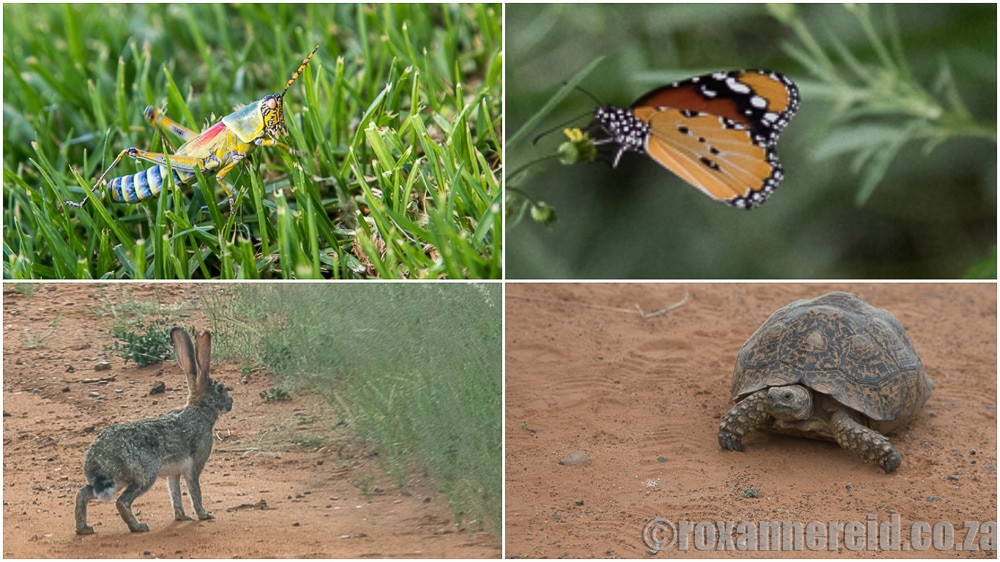
Small creatures of Mokala: elegant grasshopper, African monarch, leopard tortoise, scrub hare
Clockwise from top left: elegant grasshopper, African monarch, leopard tortoise, scrub hare
Forget the Big Five and focus on finding attractive little creatures like the elegant grasshopper, butterflies, tortoises, or the southern rock agama with its reddish body and bright blue head in breeding season. There are also more than 150 species of birds waiting to be found by eager twitchers (see point 4).

6. Appreciate the plants 
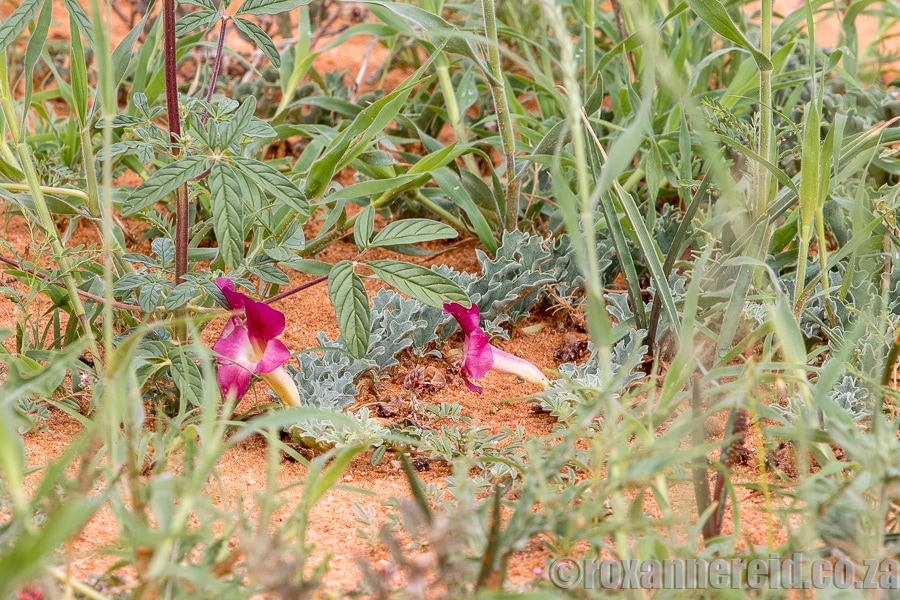
Devil's claw flowers
When the flower of the devil's claw becomes a fruit, it turns into a ferocious thorn
Mokala lies across two biomes, Savanna and Nama-Karoo, so it conserves a diversity of plant life from umbrella thorn (haak-en-steek), black thorn (swarthaak), sweet thorn, camel thorn, shepherd’s tree (witgat) and lovegrass to hoodia and the endangered devil’s claw. Buy the official information guide to the park at reception and see how many of the listed/illustrated plants you can find before you leave.

7. Love the landscape
Things to do, Mokala National Park: enjoy the landscape
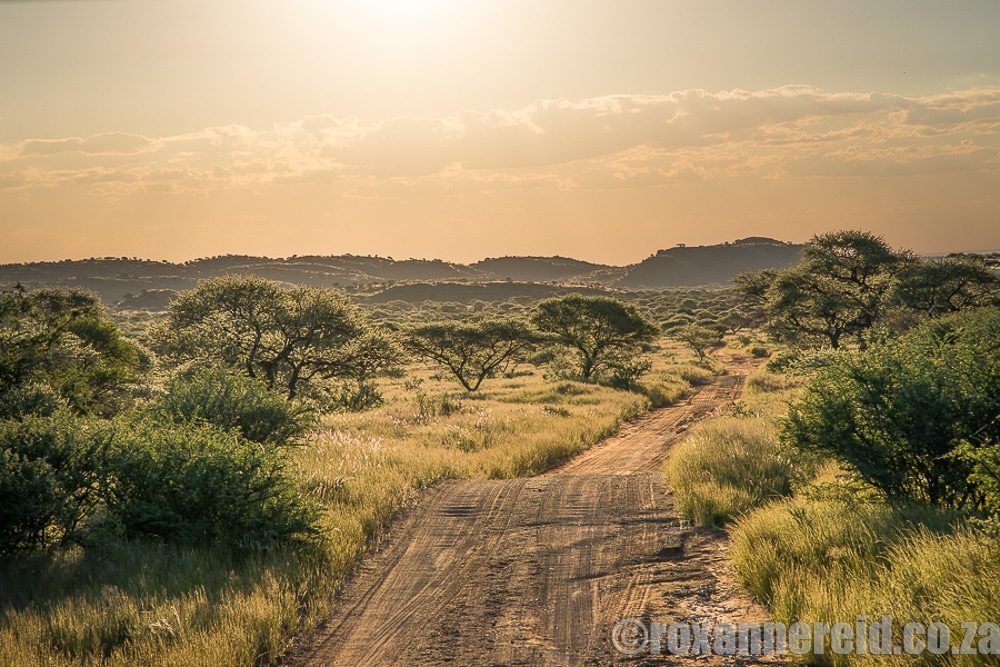
Mokala landscape just before sunset
Mokala is a pretty park, green in summer and drier in winter but always interesting because of its diversity, from open grasslands and thickets to Kalahari thornveld and dolerite koppies as well as a riverine section in the north. It’s especially attractive in the soft light of early morning or late afternoon – that hallowed time of magical light that photographers call the golden hour.

8. Listen to the surround-sound 
Black-backed jackal, Mokala National Park
Listen to the plaintive calls of the black-backed jackal
Switch off your engine and listen to the chirp of birds in the thorn trees, the hum of insects, the swish of grass as it sways gently in the breeze. The two picnic spots (see point 12) also provide a superb opportunity for tuning in to the sounds of the bush, as do the three tree-top cottages. Listen at night for the call of jackals, owls, and the rufous-cheeked nightjar.

9. Drive a 4x4 trail 
4x4 trail, Mokala National Park
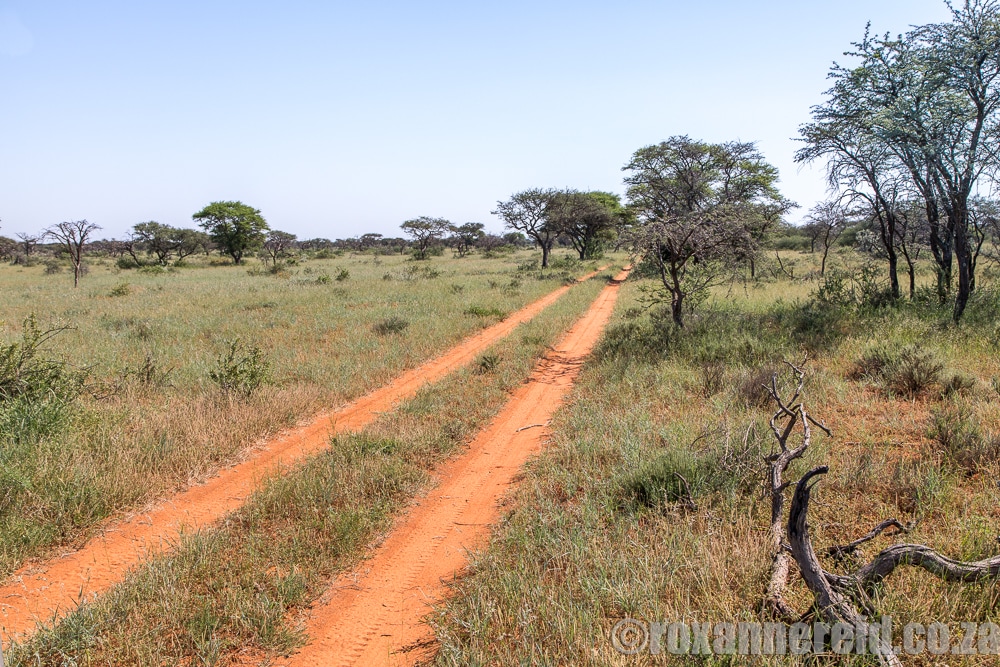
Twin-track on the Mellifera and Merateng 4x4 trails
Drive the two 4x4 trails in the Lilydale section, the 4.5km Mellifera and 3km Merakeng trails. These tweespoor trails are by no means a technical challenge, but a wonderful opportunity to get off the main road and have the world to yourself for a few kilometres. The one flows into the other, joining along the main road, so you can do them singly or consecutively. The sand is softish, so our tyres sang as we passed herds of eland, tsessebe and red hartebeest, a flock of ostriches, a few black wildebeest and a lone springbok. We also saw giraffes, zebras and a fairly large gathering of eland. In the month of March, you might be pleasantly mobbed by African monarch and yellow pansy butterflies.

10. Reach for the stars
Here in the dry air the night skies are crammed with stars, the Milky Way brighter than you’ll ever see it in the Big City. On a night drive, ask your guide to switch off the headlights so you can appreciate the stars for a few moments. If you’re camping or staying in one of the three treehouses, away from the light pollution of big camps like Mosu and Lilydale, don’t forget to look up.

11. Visit the Interpretation Centre
Inside Mokala's Interpretation Centre
Diorama and info panels at Mokala's Interpretation Centre
​Mokala’s Interpretation Centre is the cultural and educational heart of the park. Just a few kilometres from Mosu Lodge, it’s well worth a visit. It’s air-conditioned so especially appealing in the middle of the day when the heat cranks up.

Posters and displays give you a snapshot of the area’s geology and climate, plus a peek into how the Khoi, San, Griqua, and Tswana lived back in the day. You’ll learn how everything shifted when trekboers, farmers and missionaries arrived, and especially after diamonds were discovered, and about conflicts like the Griqua wars and the Anglo-Boer War.

There are a couple of really well-made dioramas that bring Mokala’s wildlife to life, featuring animals like warthog, springbok, steenbok, aardvark, and porcupine. Enjoy the views through the windows of camelthorn trees, seasonal grasses, and wildlife at a small waterhole.

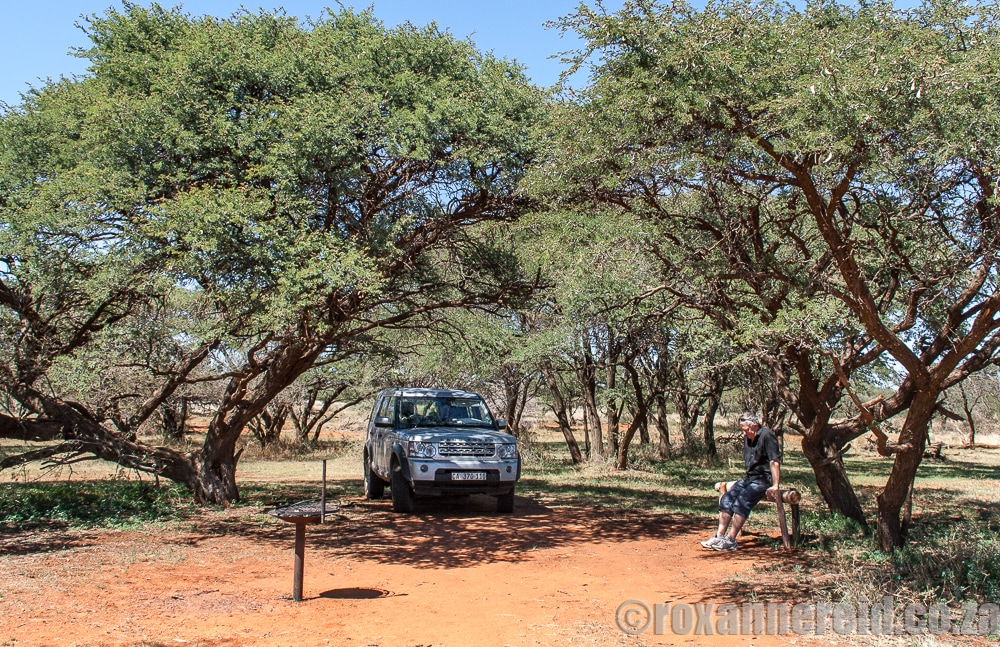
12. Pack a picnic
Matopi picnic site, Mokala National Park
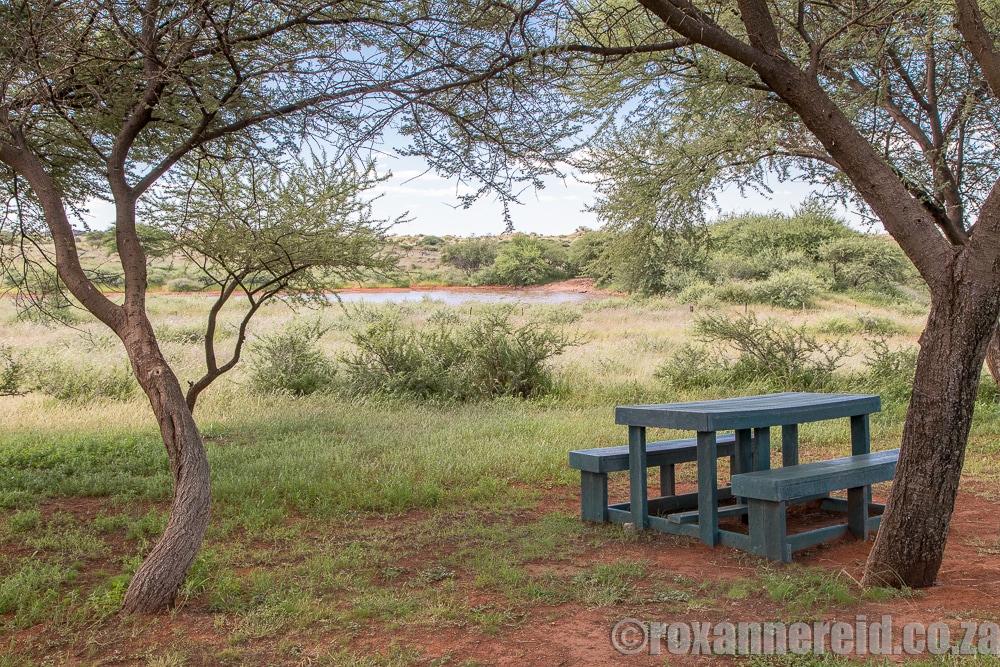
Picnic site on the Matopi Loop
Get out and stretch your legs or bring a packed lunch or braai goodies to one of two picnic areas in the park – on the Matopi Loop in the southwest or Kameeldoring Loop in the central section (both with braais and toilets). The picnic sites are open to day visitors as well as guests staying over in park accommodation. Note that they’re not fenced, so do keep your eye out, especially if you have small kids. ​
Elevated deck near Lilydale overlooking a waterhole
An elevated deck near Lilydale overlooks a waterhole
There’s also an elevated thatched deck with a single picnic table overlooking a waterhole (where we’ve been lucky to see roan antelope) about 1km from Lilydale camp. It’s suitable for a packed picnic but not a braai. There are no toilets here.

13. Cool off in the pool 
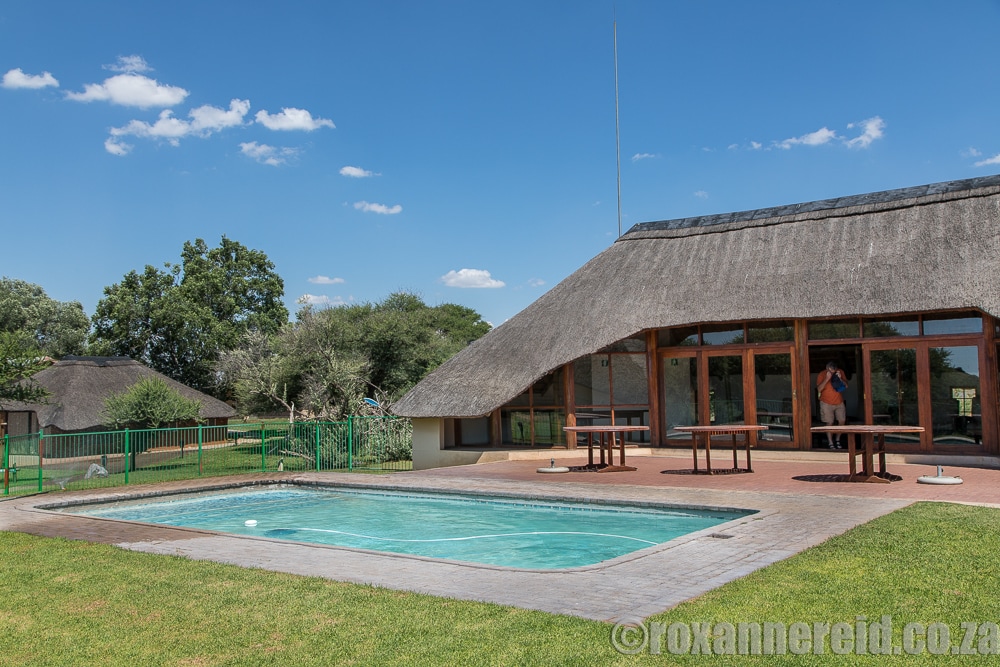
Swimming pool, Lilydale, Mokala
The pool at Lilydale
Relax and cool down on a hot day in the pools at Mosu or Lilydale, each for residents only (no day visitors). Visitors staying at Motswedi, Haak-en-Steek and the tree-top cottages are also welcome to use these two pools.

14. Go fly fishing ​
The Riet River at Lilydale, Mokala National Park
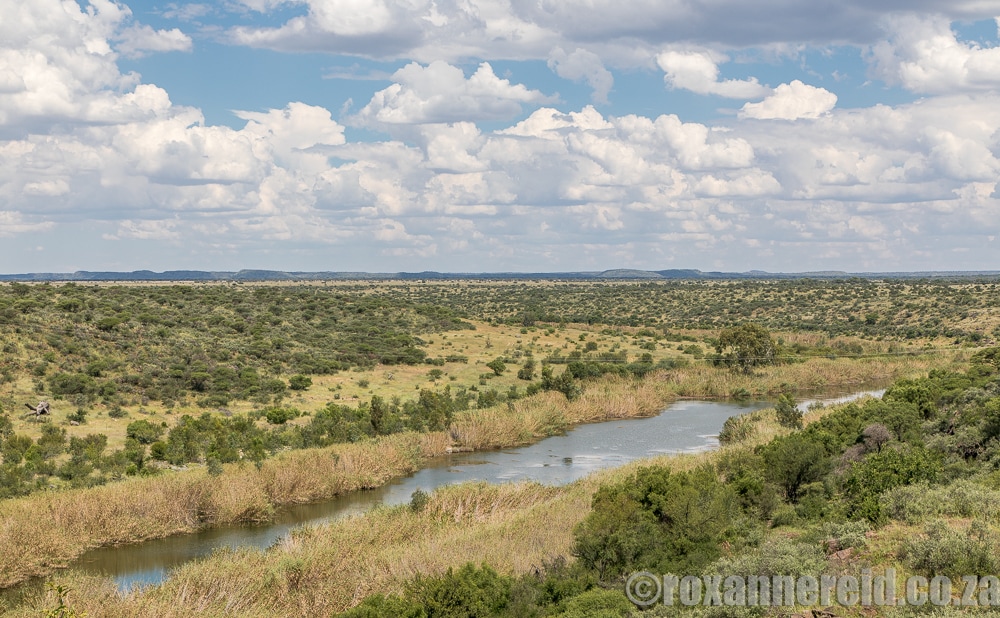
The Riet River at Lilydale
Go fly-fishing on the Riet River near Lilydale for yellowfish, carp and barbel on a catch-and release basis. You can get a permit from any post office before your visit. Take it along to Lilydale reception to pay your activity fee and get the keys to the fishing spots. Note that you can’t get to the fishing spots at De Krans or Kleinbek with a normal sedan; you need a 4x4 or at least a high clearance vehicle.

15. Enjoy sunset with the animals  
Sunset in the Kalahari thornveld
Sunsets are always a thrill in the Kalahari thornveld
A wonderful way to enjoy a wide view of the sunset is on a guided sunset drive (see point 2). But you can also kick back under a tree at Mosu to enjoy your sundowners while looking out over the camp’s waterhole. You might see buffalo, tsessebe, kudu, red hartebeest, eland and blue wildebeest coming to drink. Each of the tree-top cottages also has its own private waterhole, as do Haak-en-Steek cottage and the Motswedi Campsite. Although Lilydale camp doesn’t have a waterhole, all the cottages look out over the Riet River, making for big-sky views of sunrises and sunsets.

16. Sleep in a treehouse
There are three off-grid tree-top cottages in Mokala, which must be among my favourite places to stay in all of SANParks. There are so many animals coming to your own private waterhole at each of them that there’s no need to go out for a drive unless you want a change of scenery. None of them is fenced and each sleeps only two people in a double bed.
Inside Motswedi Tree-Top Cottage, Mokala National Park
Inside Motswedi Tree-Top Cottage
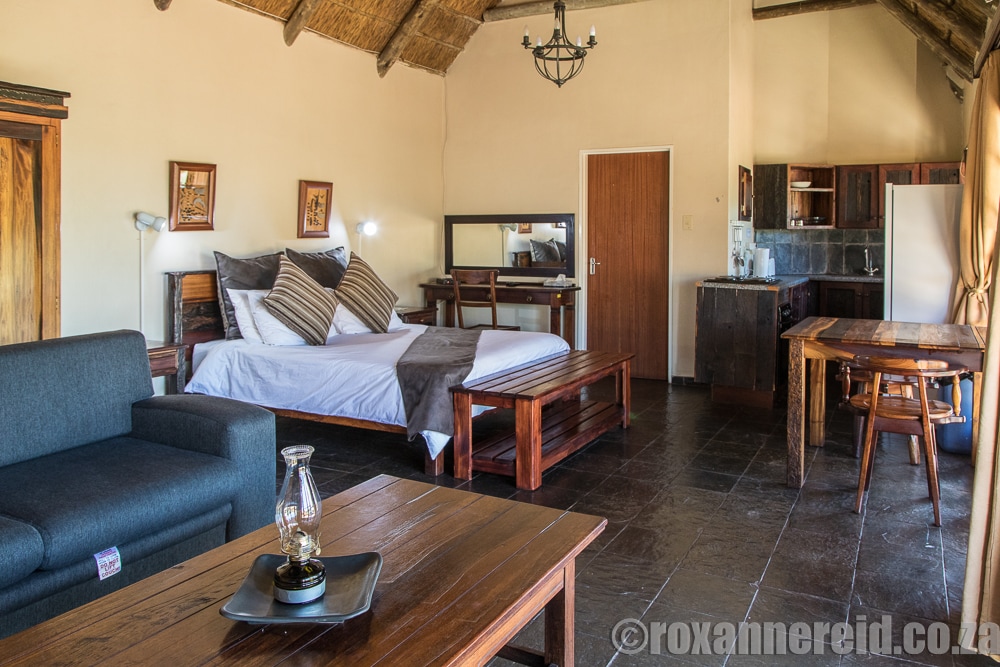
Motswedi Tree-Top Cottage is about a kilometre beyond the Motswedi Campsite in the south of the park. A huge thorn tree rises through the deck, making you feel like you’re living in a treehouse. Large windows on three sides give a 180-degree view out over a pan where you might see animals like buffalo, roan, zebra, springbok, gemsbok, tsessebe, wildebeest, kudu, and jackal. Watch out for vervet monkeys who will be focused on your food; don’t leave doors or windows open. Even in the dry season, you have a private waterhole that lures animals to drink in front of the cottage. Wake early so as not to miss the stunning sunrises here. It’s fully equipped with the usual crockery, cutlery and pans, has a braai, full-size gas fridge/freezer, gas heater for cold winters, and uses gas for cooking (full stove) and hot showers, and solar for lights.

Dinokeng Tree-Top Cottage lies between Stofdam Bird Hide and the Kameeldoring Tree-Top Cottage in the central section of Mokala. It has a deck overlooking a private waterhole that lures animals like buffalo, zebra, eland, kudu, tsessebe, wildebeest, gemsbok, springbok, and red hartebeest. The interior is on a similar plan to Motswedi (pictured above). You’ll want to spend a lot of time on your deck looking out over the waterhole and surrounding thornveld. The cottage has a braai, crockery, cutlery and pans, full-size gas fridge/freezer, gas stove with oven, gas-powered hot water for the bathroom and kitchen, gas heater for the cold winter months, and solar lights.​
Kameeldoring Tree-Top Cottage’s deck
Kameeldoring Tree-Top Cottage’s deck overlooks a waterhole
Kameeldoring Tree-Top Cottage is tucked into the branches of a camelthorn tree almost halfway between Lilydale and Mosu, far away from your nearest human neighbours. The park’s original tree-top cottage, it’s smaller than Motswedi and Dinokeng but its best feature is its private waterhole, where you might see the likes of buffalo, eland, giraffe, warthog, zebra, kudu, gemsbok, wildebeest, red hartebeest, springbok, and steenbok. Watch the sunset through the branches, braai on the deck and fall asleep to the sounds of nature all around. Like the other two, it has a large gas fridge/freezer, a gas heater for winter, and is fully equipped with the usual crockery, cutlery and pans, hot showers, and solar lights. Unlike the other two, it has only a two-burner gas cooker and no oven.

You can book through SANParks’ Central Reservations, tel 012-4289111, https://www.sanparks.org/parks/mokala, or phone Mokala directly to book, tel 053-2048000 (Mosu reception) for Motswedi and Dinokeng, and tel 053-2048300 (Lilydale reception) for Kameeldoring.

17. Stay in other Mokala accommodation
Lilydale chalets, Mokala National Park accommodation
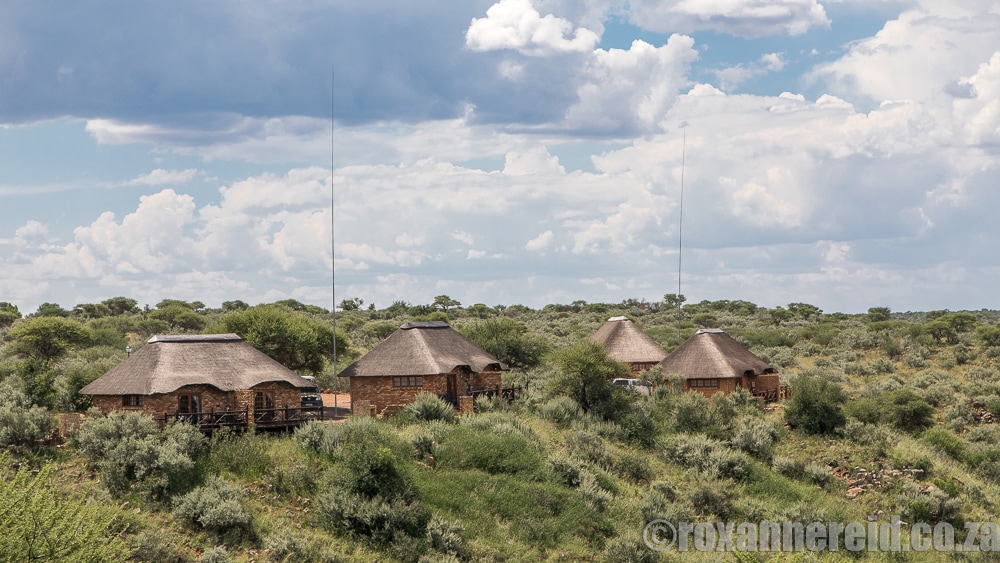
Lilydale chalets overlook the Riet River
Mosu Lodge, Mokala National Park accommodation
Luxury self-catering chalet at Mosu (photo: Clement Morolong)
As for the other Mokala National Park accommodation, choose from the following:
  • Lilydale: 12 air-conditioned self-catering chalets overlooking the Riet River in the north of the park. Cottages sleep from two to five people and are fully equipped for self-catering (braai and microwave too). There’s a universally accessible unit, and a swimming pool for guests. You park your car next to your unit.

  • Mosu Lodge: 15 air-conditioned self-catering units in the southeast of the park. Two of the units are luxury units with bath, shower and limited DSTV channels. The rest have a shower only and no TV (yay!). Each unit has a braai and is fully equipped for self-catering, including microwave. There’s a universally accessible unit, a swimming pool, and conference centre. There’s parking next to reception, with trolleys to carry your luggage to your unit. If you have an immovable fridge in your vehicle, bring a longish cord to plug it in at an external electrical point near the parking area.
    ​
  • Haak-en-Steek: this off-grid family cottage and campsite about 7km west of Mosu overlooks a private waterhole where you’ll see a procession of buffaloes, zebras, and antelope throughout the day. Even when the larger pan dries up in the dry season, the man-made waterhole entices animals. The cottage sleeps four in two bedrooms, with two bathrooms. It has a gas stove/oven and fridge/freezer, gas-heated water, solar lights, and a gas heater for cold winters, as well as all the cutlery, crockery and pots you need to self-cater. If you’re more than four people you can book the adjoining campsite for the rest of your group.
Haak-en-Steek Cottage, Mokala National Park accommodation
The four-sleeper Haak-en-Steek cottage overlooks a very active waterhole
  • Stofdam Bird Hide: For something different, sleep over at Stofdam (see more in point 4 above). You get four fold-down beds with mattresses, a solar shower and flush loo as well as an enclosed braai area, which is the only means of cooking. Bring firewood and your own sleeping bags, towels, cooking pots, cutlery and crockery. You can only move in an hour before gate closing time and must be out by an hour after gates open so that it can return to its job as a bird hide for other visitors. Book ahead with Mosu reception, tel 053-2048000.

  • Mofele Environmental Centre: Big groups – for instance, school groups also wanting a meeting room – might find Mofele of interest. You can find out more and make bookings through Mosu reception, tel 053-2048000.

18. Go camping
Mostwedi Campsite, Mokala National Park
Motswedi Campsite overlooks a waterhole
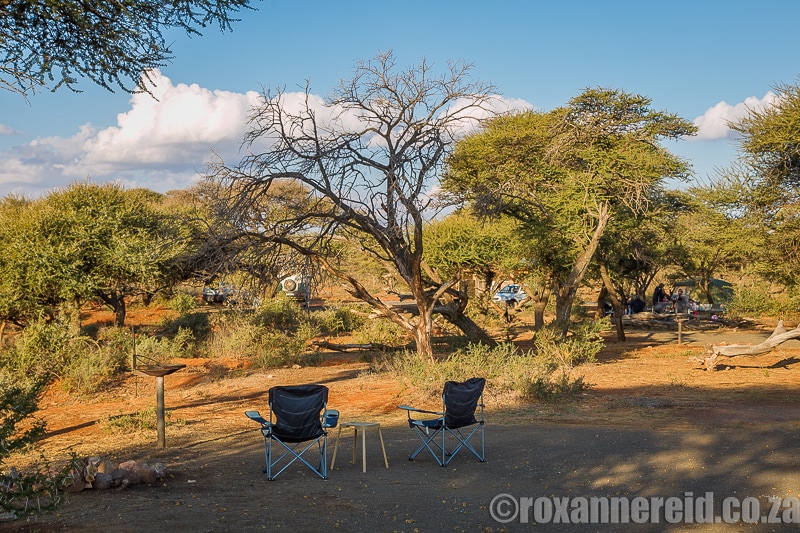
If you love camping or are on a tight budget, you’ll love Motswedi Campsite, which has just six campsites laid out in a semi-circle around a waterhole, each with its own private solar/gas kitchen with fridge/freezer, and ablutions so there’s no need to share. Luxury. (Four new campsites and ablutions are under construction.) No generators are allowed, and a maximum of six people per site. There are no conventional plugpoints. A head torch is a good idea for moving around camp after dark. A low electrified fence keeps the likes of buffalo (and other fatties) away without detracting from the sense of camping out in the wild. Listen for the quiet rustle that announces an animal has come to drink at the waterhole.

If you want to camp at Haak-en-Steek (see point 17), you can only book the campsites in conjunction with the cottage as part of a single group. The Haak-en-Steek campsite and ablutions are right next to the cottage.
Eland at a waterhole, Moakala National Park
Eland at a waterhole
Best time to visit Mokala National Park
Winter (June to August) is the best time to visit Mokala, the peak period for excellent wildlife viewing. In this dry season, vegetation thins out and animals concentrate around permanent water sources, making them easier to see and closer, which makes keen photographers happy. Days are mild and pleasant (typically 15–22 degrees Celsius), but nights and early mornings can plummet below zero with occasional frost, so pack lots of layers. Although Mokala is malaria-free all year round, there are fewer mosquitoes and other insects in winter.

Spring (September to October) is still good for game viewing as the dry season lingers, with temperatures starting to warm up.

Summer (November to March) can be hot, with daytime highs getting to around 40 degrees, especially in December and January. These months also see thunderstorms, especially in February, with summer rainfall averaging 420mm a year. Vegetation becomes lush, which can make animals harder to spot, and there’s water all over in the veld so the animals are less driven to visit manmade waterholes. But summer is the best time for birding because the migrant species have returned. Roads may occasionally be affected by rain; the park will close rain-damaged roads until they dry out (see point 11 in ‘Useful tips’ below).

Autumn (April to May) is a good transition period with less rain and lower temperatures, often still decent for wildlife before the full dry season sets in.

If your priorities include birdwatching, photography with green landscapes, or avoiding cold nights, shoulder months like April/May or September/October can be great. For the classic safari experience with easy animal sightings, stick to June to August.
Zebra foal suckling, Mokala National Park
Zebra foal suckling in the green season
Useful tips for your Mokala visit
1. You get a map of the park when you check in – a very useful resource. Make sure you’re familiar with the rules and regulations, and the gate times that are included on the map.

2. There’s no ATM in the park, but you will use your credit card to pay for everything from activities to firewood because Mokala has gone cashless. Just bring enough cash to tip your guides if you do guided activities.

3. Although there used to be restaurants at Mosu and Lilydale, these were closed some years back so there are now no restaurants in the park. Bring everything you need with you for self-catering or camping.

4. There are small shops at Mosu and Lilydale that sell a modest selection of basics, snacks, ice, and firewood, as well as books, crafts and gifts. Try not to rely on them for anything but ice and firewood; rather bring everything you need with you for your self-catering stay. If you’re used to Kruger, Kgalagadi or Addo shops, don’t expect anything like those here.

5. There’s no fuel station inside the park so fill up before you arrive, for instance at Hopetown if you’re arriving from the south, or Kimberley if you’re arriving from the north. The closest fuel to Mokala is at Modderrivier 35km south of Kimberley, especially useful if you’re entering at the Lilydale Gate.

​6. Cellphone signal is patchy in the park. There is fairly good signal at Lilydale. Mosu now has a booster for Vodacom so you get excellent signal near the reception area. MTN works best at the little thatched rest stop near the parking area and Mosu ablutions. There’s no official signal at Haak-en-Steek (though we found that MTN occasionally does connect there), at Motswedi Campsite, or the three tree-top cottages. Keep your phone on as you drive around the park and a WhatsApp message might ping through here or there. 
Giraffe with its young, Mokala
Young giraffe with its mom
 7. There are two entrance gates into the park. The turnoff to the Lilydale Gate is 2km south of Modderrivier, while the turnoff to the Mosu Gate is 57km south of Kimberley. The gravel road to the Mosu Gate is 21km long and often badly corrugated. The gravel road to Lilydale Gate is 13km and generally in better condition. That said, the Mosu Gate is still much closer if you’re staying at Mosu, Haak-en-Steek, or Motswedi. If you’re pulling a trailer or caravan, you will need to take it very slowly.

8. Entrance gate hours are:
16 October to 15 March 7:00 – 19:00
16 March to 30 April 7:00 – 18:00
1 May to 31 July 7:00 – 17:30
1 August to 15 October 7:00 – 18:00

9. Reception at Mosu and Lilydale are both around 6km from the respective entrance gates. You must check in at either Mosu or Lilydale before driving on to your booked camp. If you have a booking at a tree-top cottage, Motswedi camping site or Haak-en-Steek, you need to check in at least an hour before main gate closing times to allow time to travel to your final destination. Note that driving around outside the gate opening and closing times is not allowed.

10. The access roads to the park from the N12 are gravel, as are all roads inside the park. Corrugations are common and the roads can get damaged in the rainy season. Although you don’t need a 4x4 for most of the park (except the designated 4x4 routes, which are clearly marked), I recommend a high-clearance vehicle to take the stress out of some of the trickier spots, especially after rain. Your low-slung Porsche or Alfa is definitely not going to enjoy these roads.

11. Some of the park’s internal roads may be closed in the rainy season. This usually means some of the loops are closed, but also – occasionally – it may impact the main route between Mosu Lodge and Lilydale. It’s a good idea to phone your camp first because if the main Mosu/Lilydale road is closed and you enter in the south but are staying at Lilydale you won’t be able to get through. Similarly, if you enter through the Lilydale Gate in the north but are booked at Mosu, Haak-en-Steek or Motswedi, you won’t be able to get through. Reception staff are usually good about alerting you before your visit if that main access road is closed.

12. You can book the tree-top cottages either through SANParks Central Reservations, tel 012-4289111, or directly through Mosu reception, tel 053-2048000, for Motswedi and Dinokeng, or Lilydale reception, tel 053-2048300, for Kameeldoring. Note that the tree-top cottages aren’t suitable for people who have difficulty walking because there are around 10-20 uneven wooden steps to get from the parking area to the cottage.

13. You can’t get to the De Krans and Kleinbek fishing spots with a normal sedan; you need a 4x4 or at least a high-clearance vehicle. You’ll need to show your permit and get keys from Lilydale reception.

14. If you’re staying at Mosu or Lilydale, you can order delicious fresh bread, roosterbrood or vetkoek in the morning and it will be ready by late afternoon – a great way to support the local women who bake these items.

​15. Stick to the speed limit of 40km/h inside the park.
Red hartebeest and calf, Mokala National Park
Red hartebeest and calf
16. Note that guided sunset and night drives are only available to visitors staying in the park. Game drives operate from Mosu, so if you’re staying at Lilydale, there’s a minimum of six people needed for a game drive (because the vehicle needs to come 27km from Mosu). If you’re staying at Motswedi, Haak-en-Steek or the tree-top cottages, you can still do an early morning or sunset drive; the guide will pick you up from your camp and drop you off again.

17. All is not lost for visitors who aren’t overnighting inside the park; if you book by phoning 053-2048000 a day or two ahead, you can enjoy a guided day drive for day visitors from Mosu. Overnight guests can also choose to do guided day drives.

18. Both picnic sites are also open to day visitors – one on the Matopi Loop and the other on the Kameeldoring Loop.

19. What to pack to bring with you? Binoculars, camera, warm clothing for winter mornings/evenings, sunscreen/hat for sun protection, and insect repellent. Bird, mammal and plant books are always useful extras. And obviously, you need all the food, snacks and drinks for your self-catering stay.

20. Both Mosu and Lilydale camps have paved paths that are accessible for wheelchairs, as well as a ramp at a universally accessible self-catering unit. One of the park’s game drive vehicles has a removable seat to accommodate a visitor in a wheelchair, and there’s a bench-free place at Stofdam Bird Hide where a wheelchair can fit.

​21. Stay in your vehicle: only get out in designated areas like the picnic sites and camps.

​22. Stay on the designated roads at all times; do NOT drive off-road or on a no-entry road.
Warthog, Mokala National Park
Warthogs are not uncommon at Mokala
23. Do NOT feed the wildlife. And yes, that means not even birds or ground squirrels! Be especially aware of the presence of vervet monkeys and baboons, who are very patient and wily and will snatch food at the drop of a hat.

24. Do NOT remove any plant, animal, or any other item. This includes dry wood or firewood. You’re also not allowed to bring in any alien or listed invasive species, so it’s best to buy your firewood inside the park at Mosu or Lilydale.

25. All bookings for accommodation can be made with SANParks Central Reservations, tel 012-4289111, https://www.sanparks.org/parks/mokala, or with any of the official sales agents. You can find a list of these agents at the bottom of this web page.

26. To overnight at the Stofdam Bird Hide, book directly through Mokala National Park’s Mosu reception, tel 053-2048000.

You may also enjoy
First timer’s guide to Mokala National Park
Motswedi Campsite at Mokala National Park
5 arid parks worth visiting in the Northern Cape
Small wonders of the Kalahari: look beyond the big cats

Find this article useful? Pin it for later!
Planning a visit to Mokala National Park near Kimberley in the Northern Cape? Find out things to do there – from game drives, San rock art, birding and 4x4 trails to swimming, fly-fishing, staying in a treehouse, and more. Discover the best time to visit Mokala and find useful tips about roads, fuel, gate times, rules, what to pack, and how to book.
Copyright © Roxanne Reid - No words or photographs on this site may be used without permission from roxannereid.co.za
24 Comments
Jean
17/6/2026 06:58:05 pm

Thank you for a wonderful article with stunning photos - this has really whet my appetite - will have to change our route from Joburg to Cape Town. I have just recently discovered your website and am super impressed. Thank you Roxanne

Reply
Roxanne
18/6/2026 10:06:26 am

Ah, thanks for your encouraging comments, Jean. I really appreciate that. I hope that you love Mokala as much as we do! Definitely worth the detour.

Reply
Richard
17/6/2026 07:00:20 pm

I loved the treehouses. Being so close to nature must have been amazing. Your own private viewing space.

Reply
Roxanne
18/6/2026 10:07:55 am

Indeed, Richard, our time there was very special. The treehouses are wonderful, a chance to sit back and let nature come to you. There was so much activity at the waterholes.

Reply
David
18/6/2026 12:50:07 pm

We stayed at Mokala many years ago and loved it, just sad to hear there is now only the luxury camp site. We so enjoyed the freedom of the little low key campsite. Unfortunately that now puts it out of our reach

Reply
Roxanne
18/6/2026 12:52:23 pm

Well, David, it's not that expensive because it's not "glamping", just luxury in the sense that you have your own ablutions, kitchen, breakfast nook, fridge/freezer, waterhole, and the benefit of only 5 neighbours. The current price for Motswedi is R628 per campsite, which is about R120 more than non-luxury sites in Kruger. So still worth going back, I'd say.

Reply
Allison van vuuren
19/6/2026 07:53:22 am

This park sounds lovely! Kalahari and karoo all in one, will definately have to visit. Love your articles, they are very informative.

Reply
Roxanne
19/6/2026 10:34:59 am

Oh, Allison, I'm sure you'll love it as much as we do. Thanks for the compliment too; I try hard to imagine what someone visiting for the first time would want to know so it's good to know you think my articles are informative.

Reply
Heather Mason link
19/6/2026 07:57:43 am

You’ve made me want to get in my car and drive there right now!

Reply
Roxanne
19/6/2026 10:36:28 am

Ha! Not too sure if that's a good thing or bad. Sometimes I struggle whether to share some of my favourite places or not; it's so tempting to keep them to myself! But yeah, go, you'll love it.

Reply
bianca
19/6/2026 10:14:45 am

Great article on our mostest favourite park.

Reply
Roxanne
19/6/2026 10:38:04 am

Thanks, Bianca. It's so hard to pick favourites because we love certain things about certain parks, but this is definitely up there in our top five and unbeatable for an away-from-it-all, peaceful escape with wildlife.

Reply
Monique Cranna
19/6/2026 10:37:44 am

Love hearing about the lesser known parks. This one has now been added onto the “need to visit” list

Reply
Roxanne
19/6/2026 10:40:31 am

You will just love it, Monique. Very different to Kruger or Kgalagadi but magical in its own way. I should have kept my mouth shut - too many people are going to want to go there now, ha ha.

Reply
Kristen Thomas
20/6/2026 05:59:03 pm

Absolutely love this. Didn’t even know this Park was here, but definitely on my radar now. We have to make a stop on my next trip! Such gorgeous photos

Reply
Roxanne
20/6/2026 06:41:57 pm

Thanks for the compliment, Kristen. It's very low key compared to some of the more famous parks in southern Africa but definitely worth some time. We've been multiple times.

Reply
Mary Ann Kelly link
20/6/2026 11:02:59 pm

So well written and a pleasure to savor your photos. The zebras were the highlight for me.

Reply
Roxanne
21/6/2026 08:43:40 am

Thanks, Mary Ann, glad you enjoyed it. I must admit, I have a soft spot for zebras - especially fluffy little foals.

Reply
Elmarie link
22/6/2026 05:59:21 am

We have been planning to visit Mokala for a long time and in May we finally got there. We absolutely loved it! The sense of place, the absolute quiet, millions of stars at night. This is where you really rest and contemplate life and one's blessings. No big five, no matter! There are rhinos and buffalo's and we were lucky enough to have sightings. Not as many birds as most have migrated but we had awesome sightings nonetheless. Our favourite accommodations were Haak-en-Steek and Dinokeng tree house. Di Nokeng is fantastic with the waterhole only 38metres ftom your treehouse so one could just sit on the deck all day long and watch animals come and go. At around 16h30 every afternoon when we lit our Braai, a little duiker, sometines 2 would come and feed right next to the deck. One could almost touch it! So if you sit quietly you can just enjoy watching it nibbling away. We also stayed at Mosu but there are a number of chalets. At Dinokeng and Haak-en-Steek you are totally alone - just you and nature! Kameeldoring was disappointing. It is very rundown and the steps going up is not wide enough and the top one unsafe. The deck is also damaged and one does not feel saade. Inside also problems, the sliding door to bathroom's handle hangs on for dear life and sometines one does want privacy. Warm water at kitchen sink also a problem, shutting off after only a few second. Very rundown, curtains in a state too etc etc - was not worth the money for us. Absolute MUST DO'S was the bushbraai (one has to book at least 2 weeks in advance fir them to buy stock and the San Rick engraving trip. The bushbraai is a sunset drive, then the bushbraai at Stifdam and then a night drive. Worth every cent. The friendly staff made the whole experience so incredible and we had fantastic sightings including the rare and shy aardvark which was the highlight of our trip! The San rock engravings was also so worth it. It is very important to wear comfortable shoes at one climbs amongst a very rocky way and I took a walking stuck with too which made it much easier too. One can imagine looking over the vast plains how the San lived there. We took wonderful photos and our guide, Johan Vaalbooi was such a gentle soul and made our trips so worthwhile. We have not stayed at Lily Dale but did stop there and it looks so nice. All the chalets built up high above the water with the sound of the rushing water in your ears, what could be more peaceful? We will be back for sure!

Reply
Roxanne
22/6/2026 10:48:53 am

Thanks for your heartfelt comments, Elmarie. We also love the places where it's just us and nature. Bush braais and the San rock engravings tour are popular choices, I think. And I agree with you about Johan Vaalbooi; he's a wonderful guide. So knowledgeable.

As for Kameeldoring tree-top cottage, it is a little old and tired, being the first one ever built. But it's cheaper than the other two, so we didn't mind all that much, even though my hubby tried to fix the bathroom handle and we also had some issues with the hot water.

Reply
Lilly
23/6/2026 06:11:29 pm

I’ve been absent for a while, but now I remember why I used to love this website. Thank you, I’ll try and check back more frequently. How frequently do you update your website?

Reply
Roxanne
23/6/2026 08:33:46 pm

Glad you have rediscovered it! I usually post once a month, but why not sign up for email alerts, and I'll let you know each time a new post is published?

Reply
Cathy Peacock
9/7/2026 12:10:41 pm

Hi there. A great write up, thank you. We have booked Lilydale in September, coming from the Eastern Cape. Looking forward to our visit

Reply
Roxanne
10/7/2026 04:17:08 pm

Oh Cathy, I do hope you enjoy your visit. Even staying at Lilydale in the north, you will hopefully have time to venture south. There are so many lovely drives at Mokala. With luck, all of the loops might be open by September (some were closed after heavy rain when we were last there in May).

Reply

Your comment will be posted after it is approved.


Leave a Reply.

    Get email links to the latest posts

    Buy my books
    Travels in the Kalahari, amazon.com e-book
    E-book 2012
    A Walk in the Park, amazon.com e-book
    2nd ed e-book 2015
    The Essential Guide to Self-Editing, amazon.com e-book
    E-book 2017

    About 

    I'm an independent travel writer and book editor with a passion for Africa - anything from African travel, people, safari and wildlife to adventure, heritage, road-tripping and slow travel.
    My travel buddy and husband Keith is the primary photographer for this blog.
    We're happiest in the middle of nowhere, meeting the locals, trying something new, or simply watching the grass grow.
    Use this website to discover new places to go, revisit places you've loved, or take a virtual tour of destinations you only dream about.

    Categories

    All
    Baviaanskloof
    Books
    Botswana
    Camping
    Cape Town
    Chobe
    Conservation
    Drc
    Eastern Cape
    Etosha Namibia
    Food
    Free State
    Garden Route
    Gauteng
    Issues
    Kalahari
    Karoo
    Kenya
    Kruger National Park
    Kwazulu Natal
    Lesotho
    Limpopo
    Linyanti
    Madagascar
    Malawi
    Mozambique
    Mpumalanga
    Namaqualand
    Namibia
    Nature Parks
    Northern Cape
    Okavango
    Overberg
    People
    Photography
    Richtersveld
    Tanzania
    West Coast
    Western Cape
    Wild Creatures
    Zambia
    Zimbabwe

    Archives

    July 2026
    June 2026
    May 2026
    April 2026
    March 2026
    February 2026
    January 2026
    November 2025
    October 2025
    September 2025
    August 2025
    July 2025
    June 2025
    May 2025
    April 2025
    March 2025
    February 2025
    January 2025
    November 2024
    October 2024
    September 2024
    July 2024
    June 2024
    May 2024
    April 2024
    March 2024
    February 2024
    January 2024
    November 2023
    October 2023
    September 2023
    August 2023
    July 2023
    June 2023
    May 2023
    April 2023
    March 2023
    January 2023
    November 2022
    October 2022
    September 2022
    August 2022
    July 2022
    June 2022
    May 2022
    April 2022
    March 2022
    January 2022
    November 2021
    October 2021
    September 2021
    August 2021
    July 2021
    June 2021
    April 2021
    March 2021
    February 2021
    January 2021
    December 2020
    November 2020
    October 2020
    September 2020
    August 2020
    July 2020
    June 2020
    May 2020
    April 2020
    March 2020
    February 2020
    January 2020
    November 2019
    October 2019
    September 2019
    August 2019
    July 2019
    June 2019
    May 2019
    April 2019
    March 2019
    January 2019
    December 2018
    November 2018
    October 2018
    September 2018
    August 2018
    July 2018
    May 2018
    April 2018
    March 2018
    February 2018
    January 2018
    December 2017
    November 2017
    October 2017
    September 2017
    August 2017
    July 2017
    June 2017
    May 2017
    April 2017
    March 2017
    February 2017
    January 2017
    December 2016
    November 2016
    October 2016
    September 2016
    August 2016
    July 2016
    June 2016
    May 2016
    April 2016
    March 2016
    February 2016
    January 2016
    December 2015
    November 2015
    October 2015
    September 2015
    August 2015
    July 2015
    June 2015
    May 2015
    April 2015
    March 2015
    February 2015
    January 2015
    December 2014
    November 2014
    October 2014
    September 2014
    August 2014
    July 2014
    June 2014
    May 2014
    April 2014
    March 2014
    February 2014
    January 2014
    December 2013
    November 2013
    October 2013
    September 2013
    August 2013
    July 2013
    June 2013
    May 2013
    April 2013
    March 2013
    February 2013
    January 2013
    December 2012
    November 2012
    October 2012
    September 2012
    August 2012
    July 2012
    June 2012
    May 2012
    April 2012
    March 2012
    February 2012
    January 2012
    December 2011
    November 2011
    October 2011
    September 2011
    August 2011
    July 2011
    June 2011
    May 2011
    April 2011
    March 2011
    February 2011
    January 2011
    December 2010
    November 2010
    October 2010
    September 2010
    August 2010
    July 2010
    June 2010
    May 2010
    April 2010
    March 2010
    January 2010
    November 2009


Copyright © Roxanne Reid - No words or photographs on this site may be used without written permission from roxannereid.co.za
Unauthorised scraping prohibited.


Privacy Policy, GDPR and POPIA compliance
​* We promise that we take data safety seriously and use your private data only to offer a personalised experience
* If you subscribed to our newsletter, you will receive our newsletters. You can always unsubscribe by following the link in email or by emailing us
* If you gave us your name, it will only be used to personalise the newsletters
* We have never sold, we are not selling, and we will not sell any of your personal data provided to us
* The blog uses cookies to track activity. It is anonymous except for telling us your location and what you did on our blog
​
Photos from berniedup, Lucy_Hill